

Today, I want to talk about something that can make plant care easier, self-watering pots!
They’ve become really popular, and for good reason. Self-watering pots can help keep your plants happy by providing a consistent moisture level, but they’re not the perfect solution for every plant or situation.
Let me share my experiences with self-watering pots and Tradescantias, and give you a few tips on when and how to use them.
When Self-Watering Pots Work Well
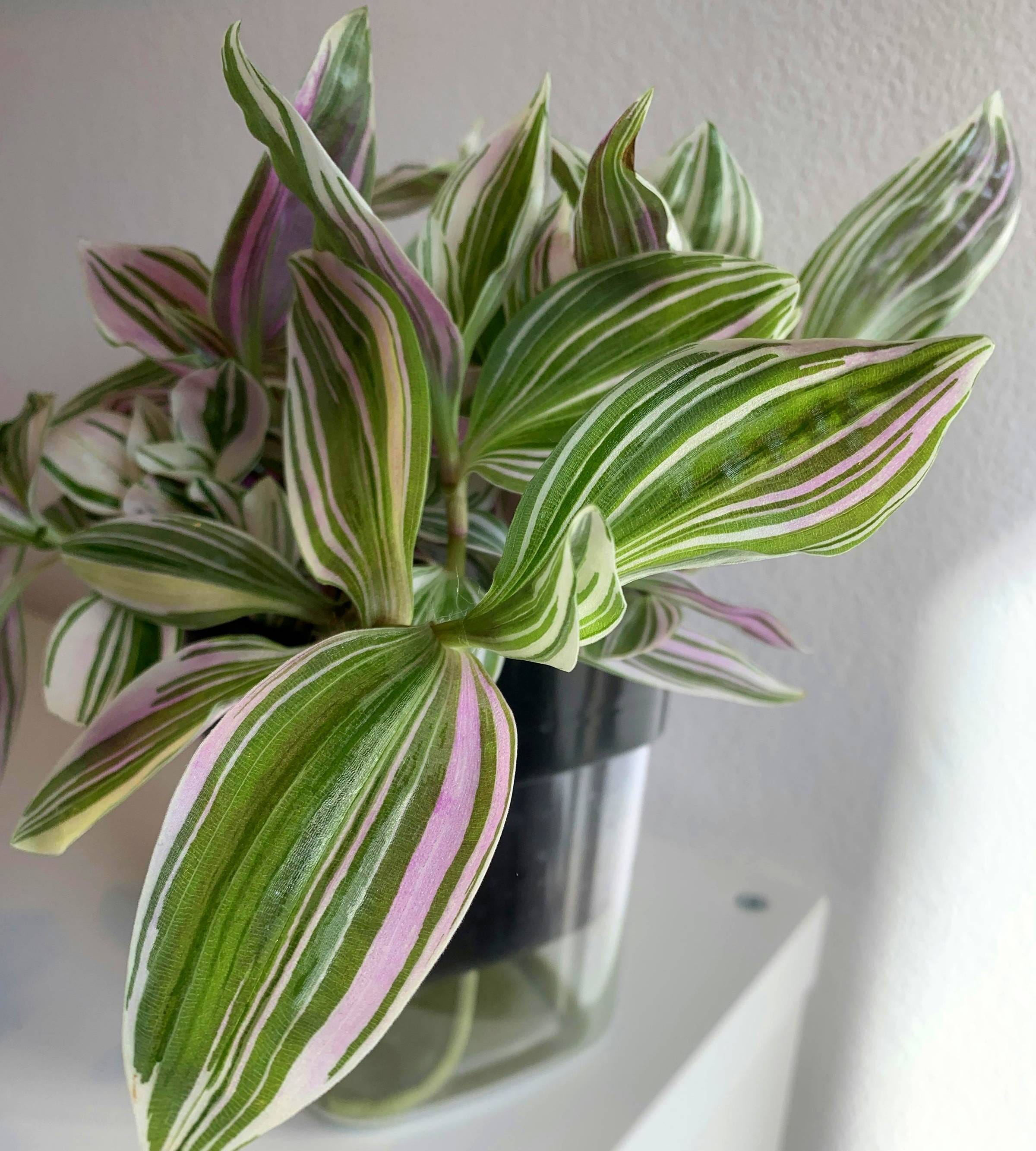
In my experience, self-watering pots work best for Tradescantias that have large, established root systems that fill most of the pot. When the roots are strong and well-developed, they can use up the water before it becomes a risk for overwatering. Ideally, your plant should use up the water in the reservoir within a week to ten days. It’s also important to let the pot dry out completely before refilling the reservoir. If the soil stays constantly moist, you’ll soon run into issues with overwatering.
I’ve also found that combining self-watering pots with sphagnum moss can be a great option. The moss helps retain moisture while also adding aeration, which keeps the roots healthy. This setup works well for both small plants with little or no roots and larger plants with well-established root systems. Just make sure not to pack the moss too tightly, and for smaller plants, use a pot that’s appropriately sized.
When Self-Watering Pots Don’t Work So Well
On the other hand, self-watering pots aren’t always the best choice for every plant. I’ve noticed that they don’t work as well for cuttings or smaller plants with delicate root systems. The roots are often too small to take up the water quickly enough, and the constant moisture can lead to root rot or other issues.
For cuttings or younger plants, I prefer using regular pots and watering them manually, allowing the soil to dry out more between waterings. After all, Tradescantias are succulent-like plants and can store water in their leaves and stems, so they actually prefer drying out between waterings. I know many recommend never letting them dry out completely, but only letting the top inch dry, and I think that’s really bad advice because it often leads to root rot.
As for the idea that letting them dry out causes brown leaf tips, I believe that’s a myth. I let my Tradescantias dry out all the time, and I rarely have any issues with brown tips.
Final Thoughts
Self-watering pots can be a fantastic tool for certain Tradescantias, especially when they have larger, well-established roots. But for smaller plants or cuttings, a traditional potting setup might be the better option. As with everything in plant care, it’s all about finding what works best for you and your plants!
Feel free to reach out if you have any questions about using self-watering pots—I’m happy to help!
If you haven’t already, don’t forget to subscribe so you never miss out on future newsletter.
Thanks for reading, and happy planting! 🌿
/Katja