

This week’s newsletter is all about Tradescantia zebrina, probably the most well-known Tradescantia out there.
But did you know there are 21 different named cultivars? Some of them look so similar it’s almost impossible to tell them apart unless you know exactly what to look for.
In this issue, I’ll go through what makes Zebrina special, why it can be tricky to identify, and share a few fun facts you might not have heard before. Plus, I’ve made a little chart to show just how alike some of them really are.
And to wrap things up, I’ll share the story behind how Tradescantia got its name.
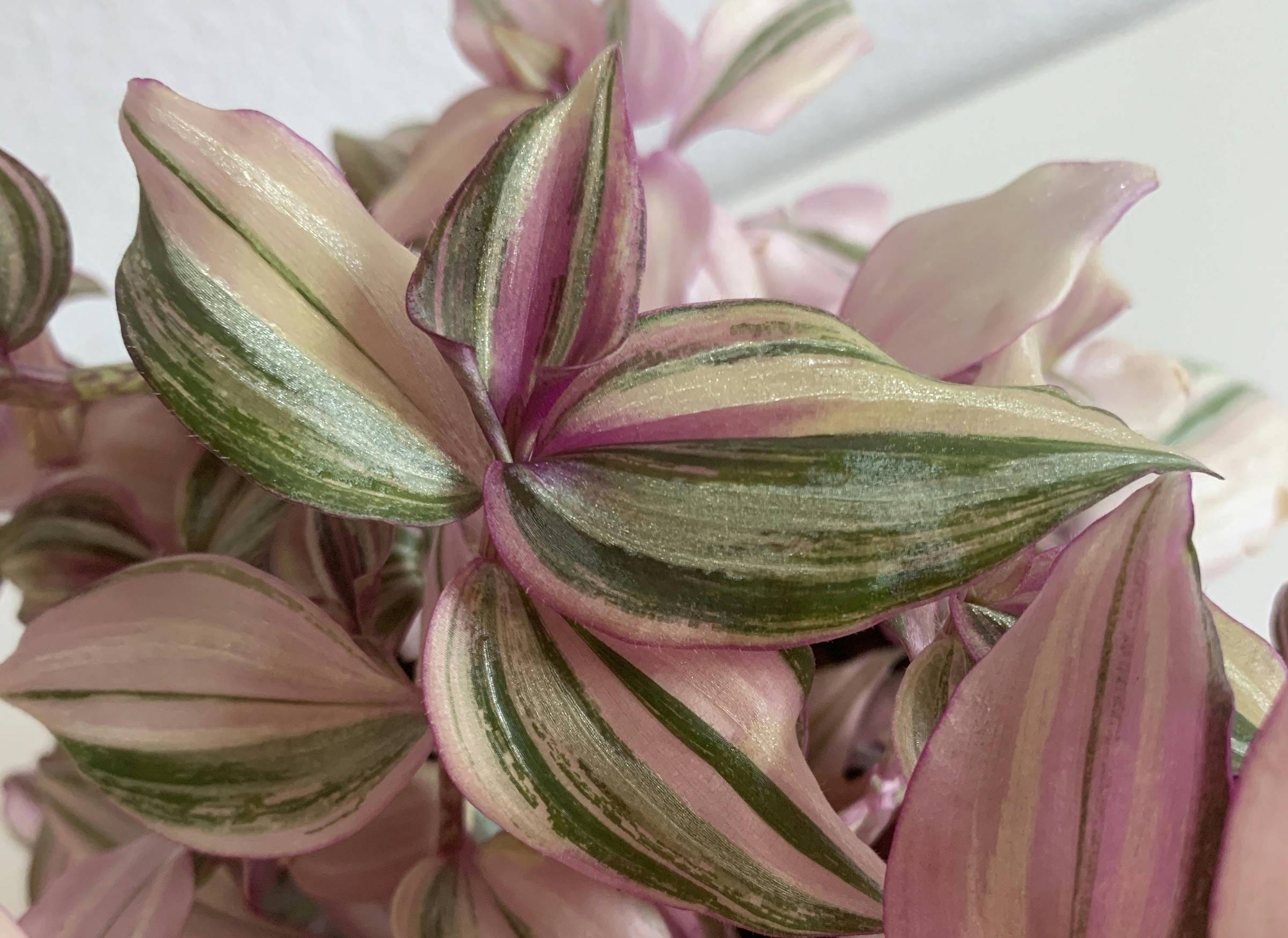
Tradescantia Zebrina
Tradescantia zebrina is probably the most common Tradescantia grown as a houseplant. And it’s easy to see why. With its shimmering silver-striped leaves, it stands out in any home. Most cultivars in this species have those classic silver stripes, but there are a few exceptions. It’s also the species of tropical Tradescantia with the most named cultivars. Right now, there are 21 named cultivars in circulation
Tradescantia zebrina originally comes from southern Mexico and Guatemala, where the climate is warm and humid. In the wild, it grows under trees in forests or near rivers and streams. It’s used to filtered light from above, rich soil, and moist air, ideal conditions for a plant that loves to trail, spread, and root wherever it can.
Over the years, Tradescantia zebrina has gone by many different names. The most common older name is Zebrina pendula, which you’ll still see in some plant books and labels. But today, it’s officially classified as part of the Tradescantia genus.
It’s also commonly known as Inch Plant, a name that refers to the spacing between the leaves, about an inch apart along the stem. The name Silver Inch Plant is also used, highlighting the plant’s shimmering silver stripes. These names are still popular, especially in English-speaking countries, though they can sometimes be used for other Tradescantias too.
In Sweden, it’s known as Zebrablad, which simply translates to zebra leaf.
The most common Zebrina cultivar is Violet Hill, also known under names like Silver Plus, Pink Joy, and Red Gem. It’s fairly easy to recognize because it has small bumps in the center of the leaves, something that’s unique to Violet Hill and one other type: Minima. Minima also has those bumps, but its silver stripes form a zigzag pattern, unlike the straight lines on Violet Hill.
Another well-known cultivar is Burgundy, which also goes by names like Purple Joy, Purple Passion, and Red Jewel. It has two look-alikes: Deep Purple and Little Hill. These can be tricky to tell apart, but since they’re not as common, chances are you’re looking at a Burgundy, unless you’ve been specifically hunting for the others.
Variegated Zebrinas
Zebrina ‘Quadricolor’, ‘HappiLee’, and ‘Discolor Multicolor’
These are three variegated cultivars belonging to the Zebrina species. At first, they can be challenging to tell apart, but there are some clues to help identify them. While some suggest checking for hair or colour on the leaves to tell them apart, the amount of hair can vary, and so can the colour and it makes it an unreliable method for differentiating them. It’s better to check the silver stripes. ‘Quadricolor’ has the widest stripes, which cover half of the leaf and appear solid. ‘HappiLee’s stripes are slightly narrower with a distinctive zigzag pattern. And ‘Discolor Multicolor’ has the thinnest stripes, with a broken appearance.
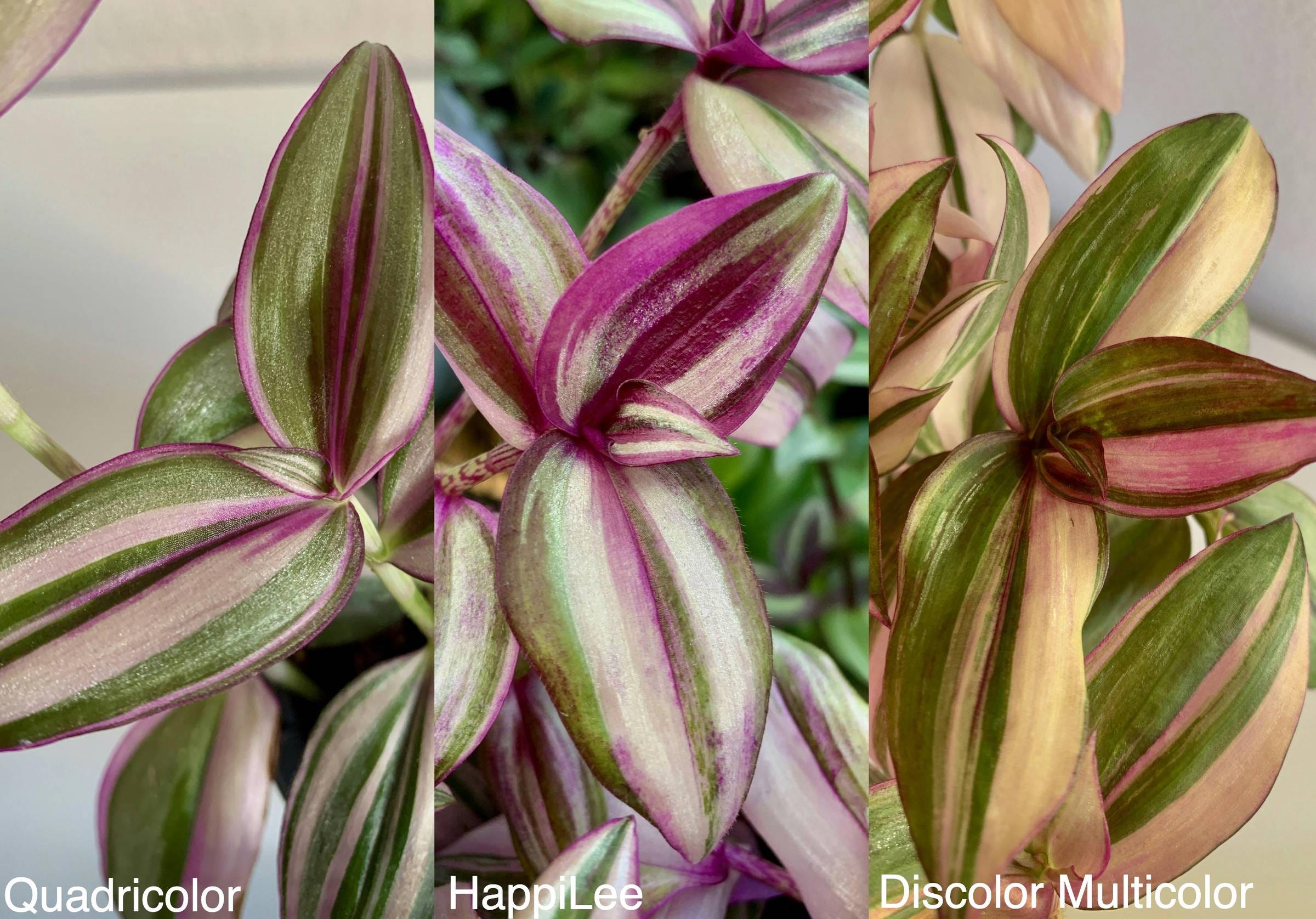
Different types of Tradescantia Zebrina
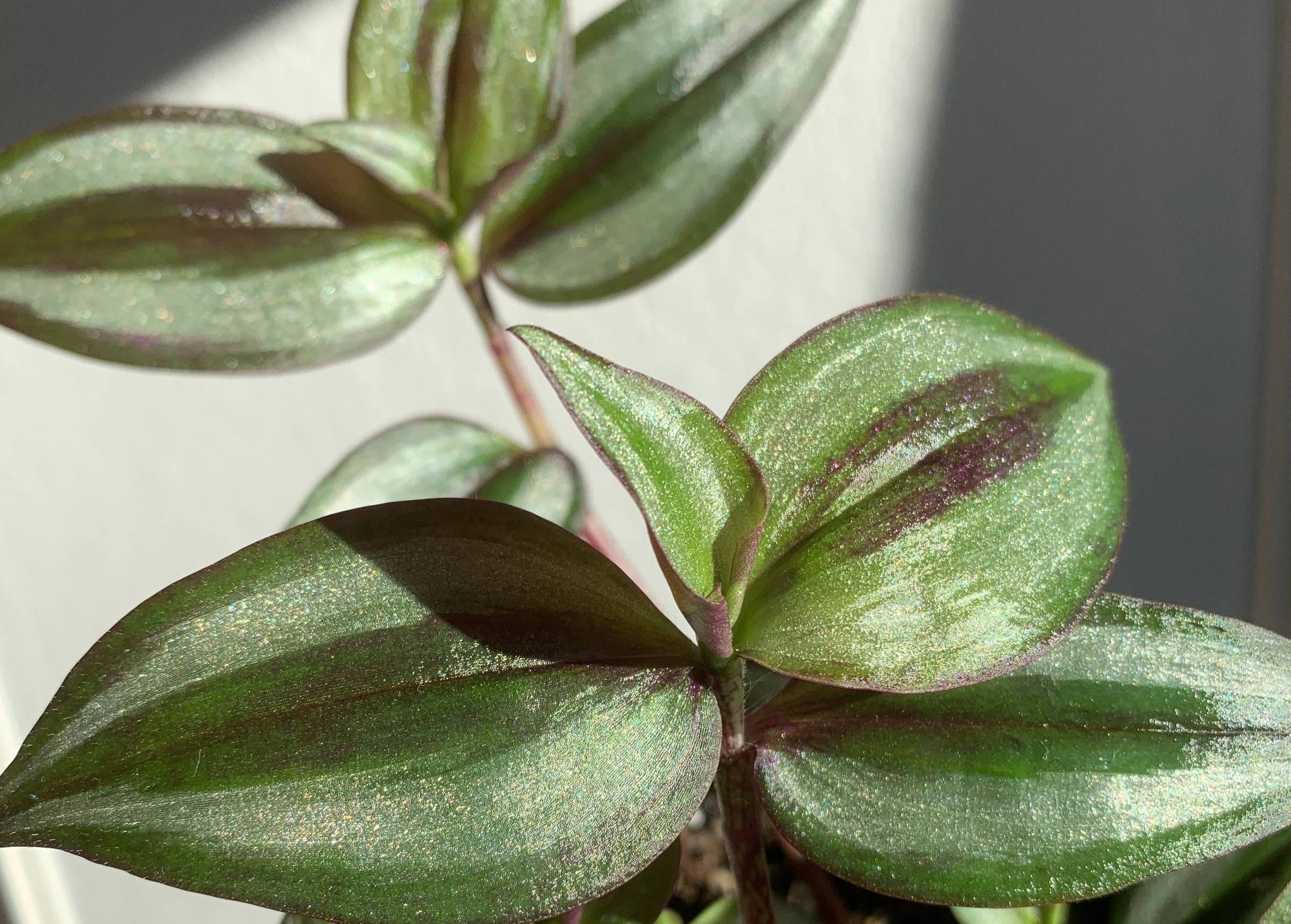
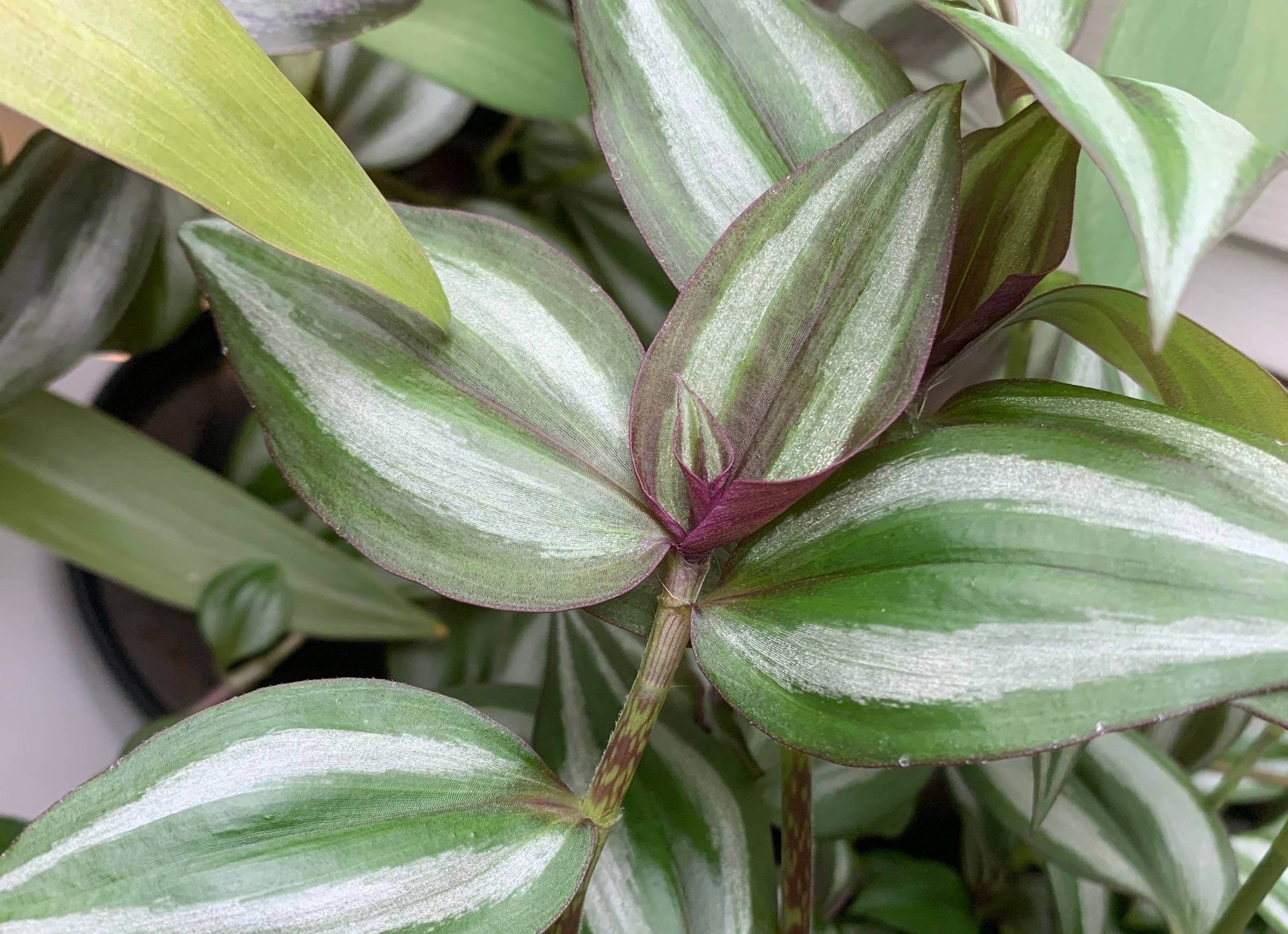
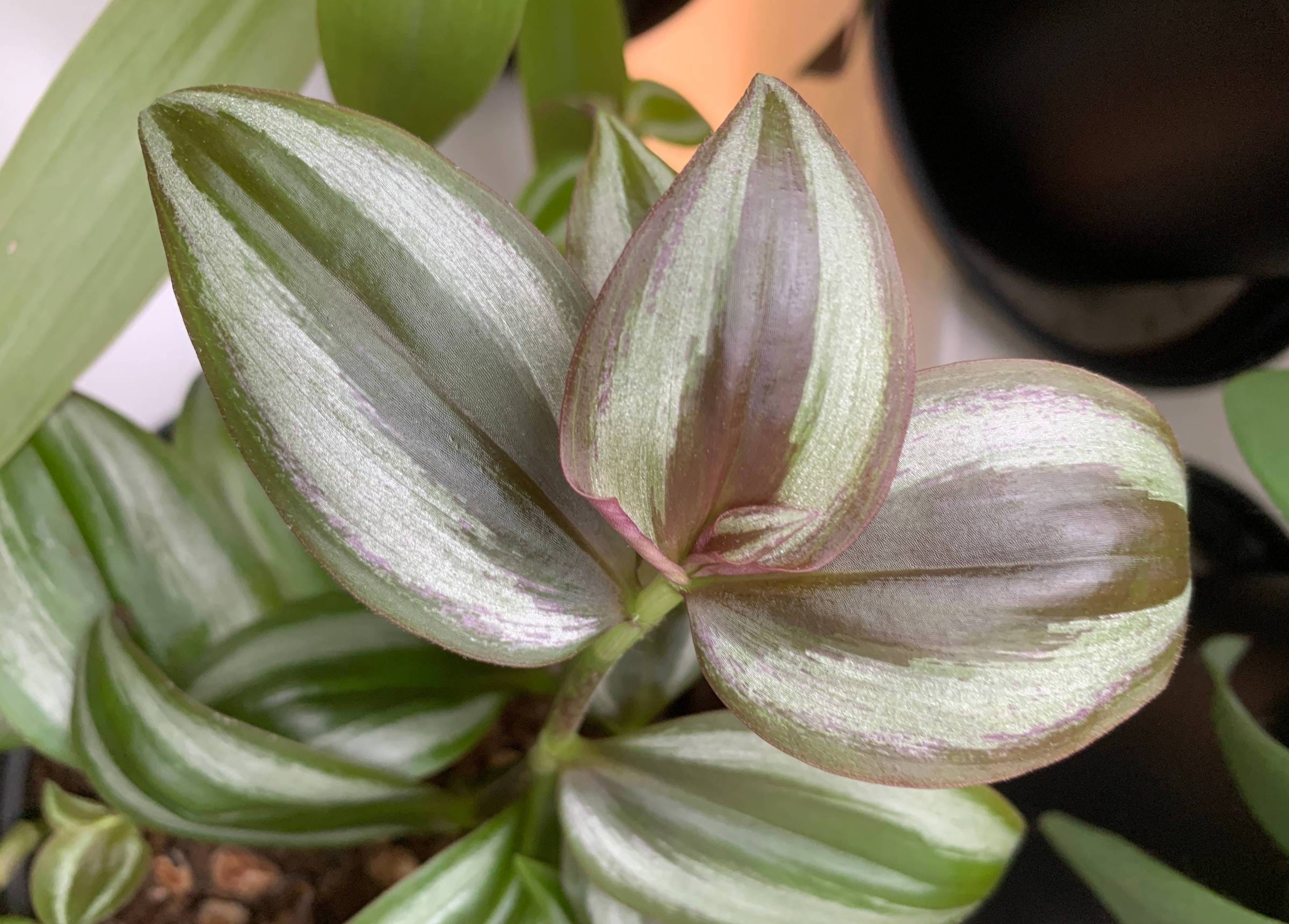
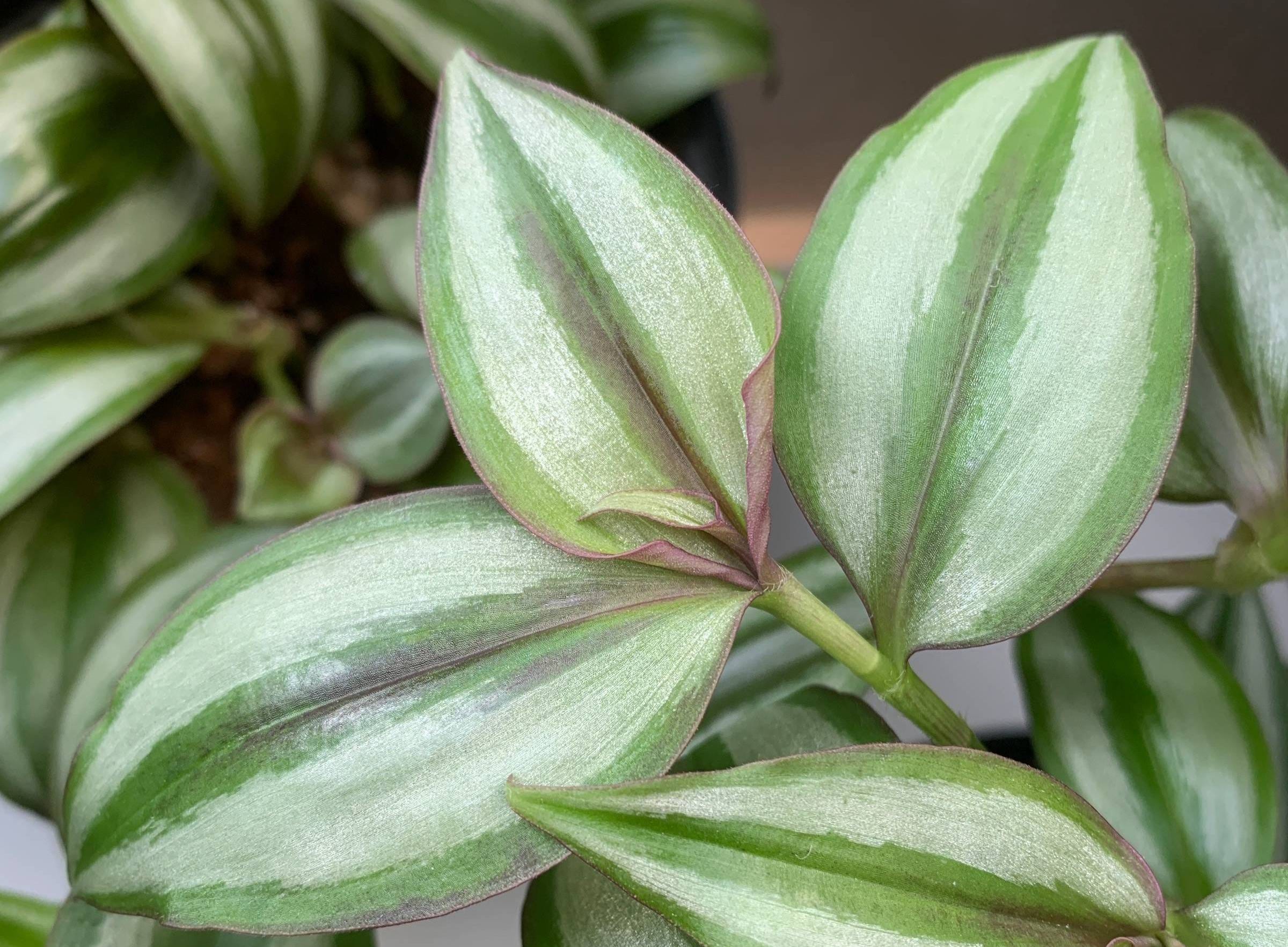
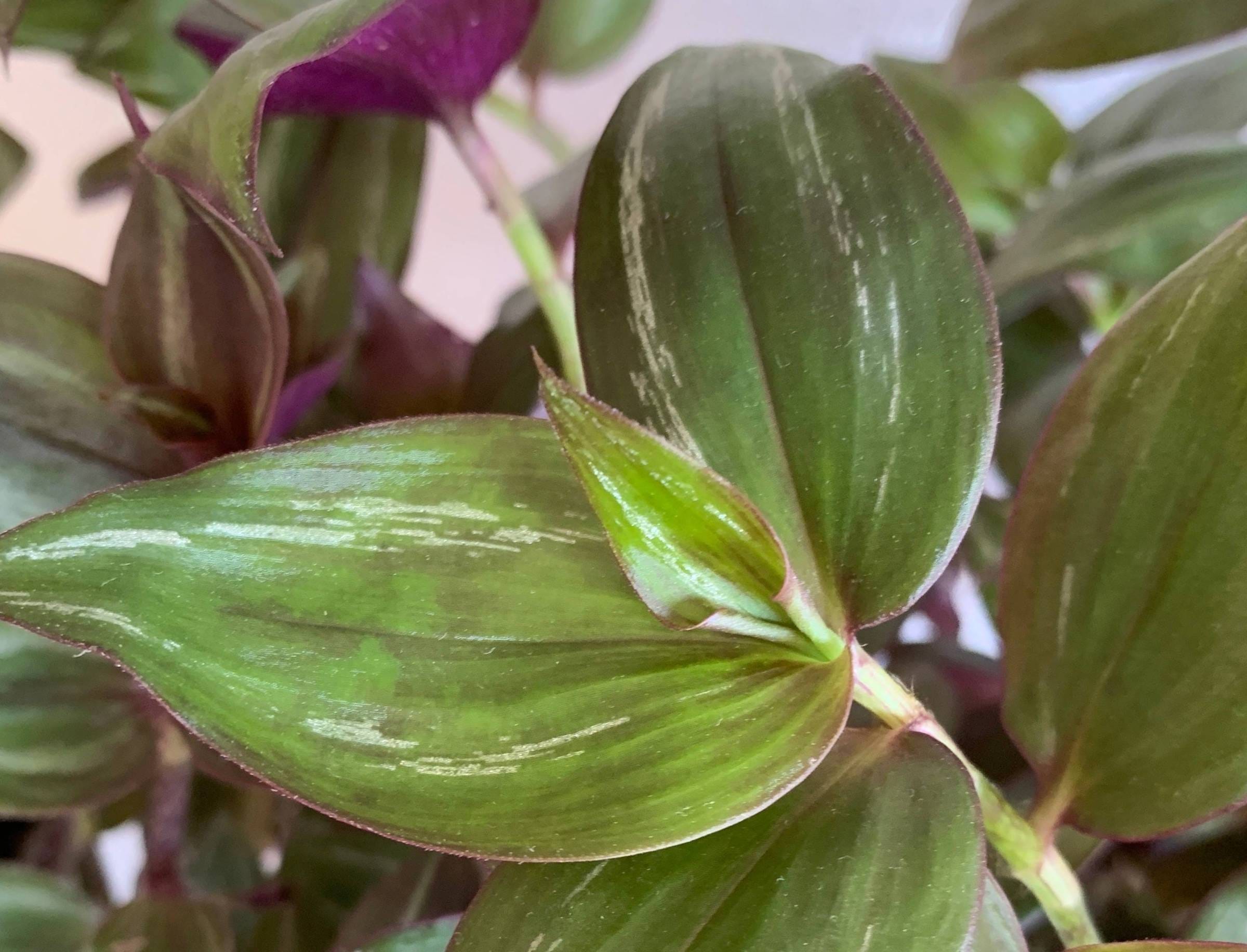
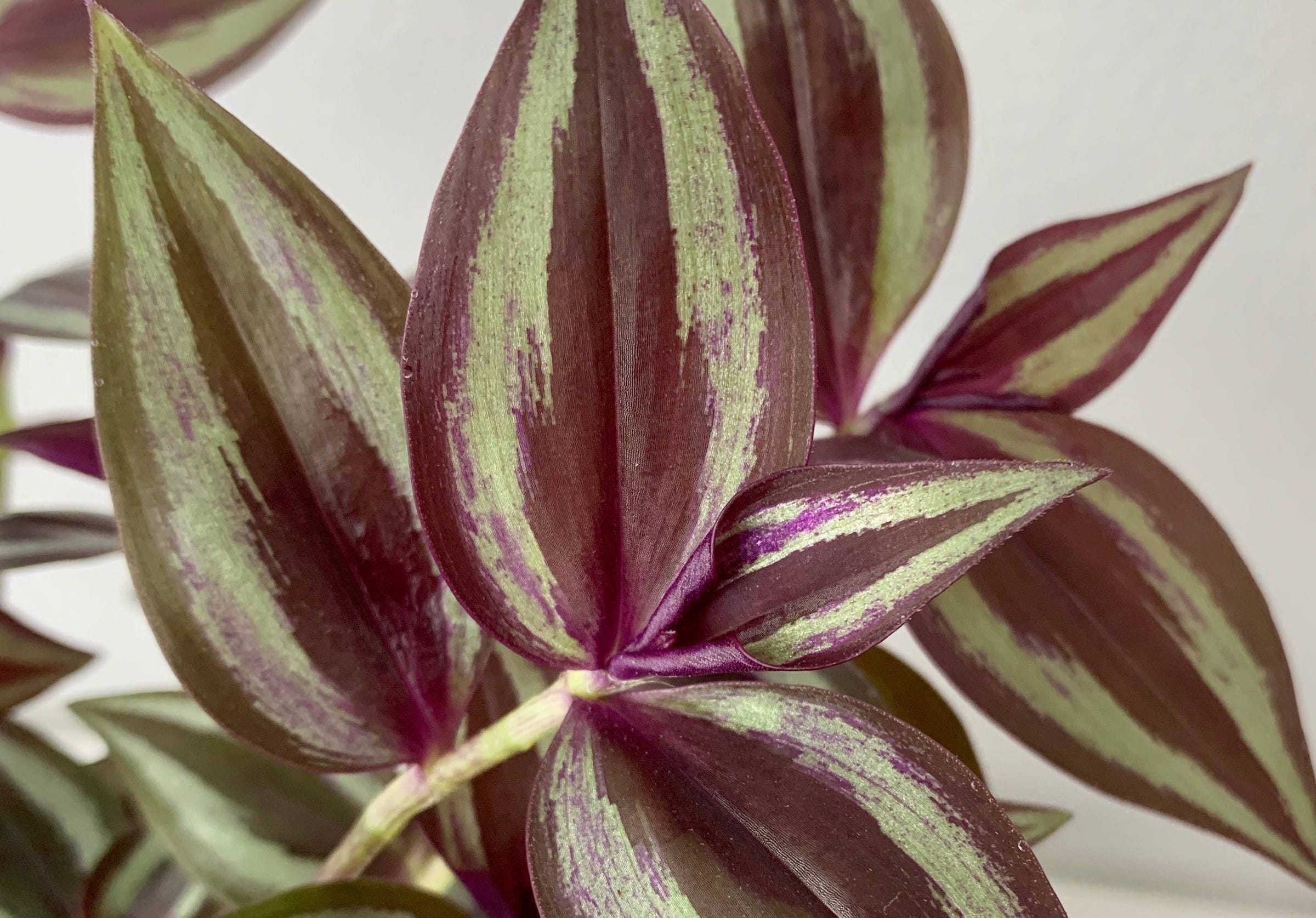
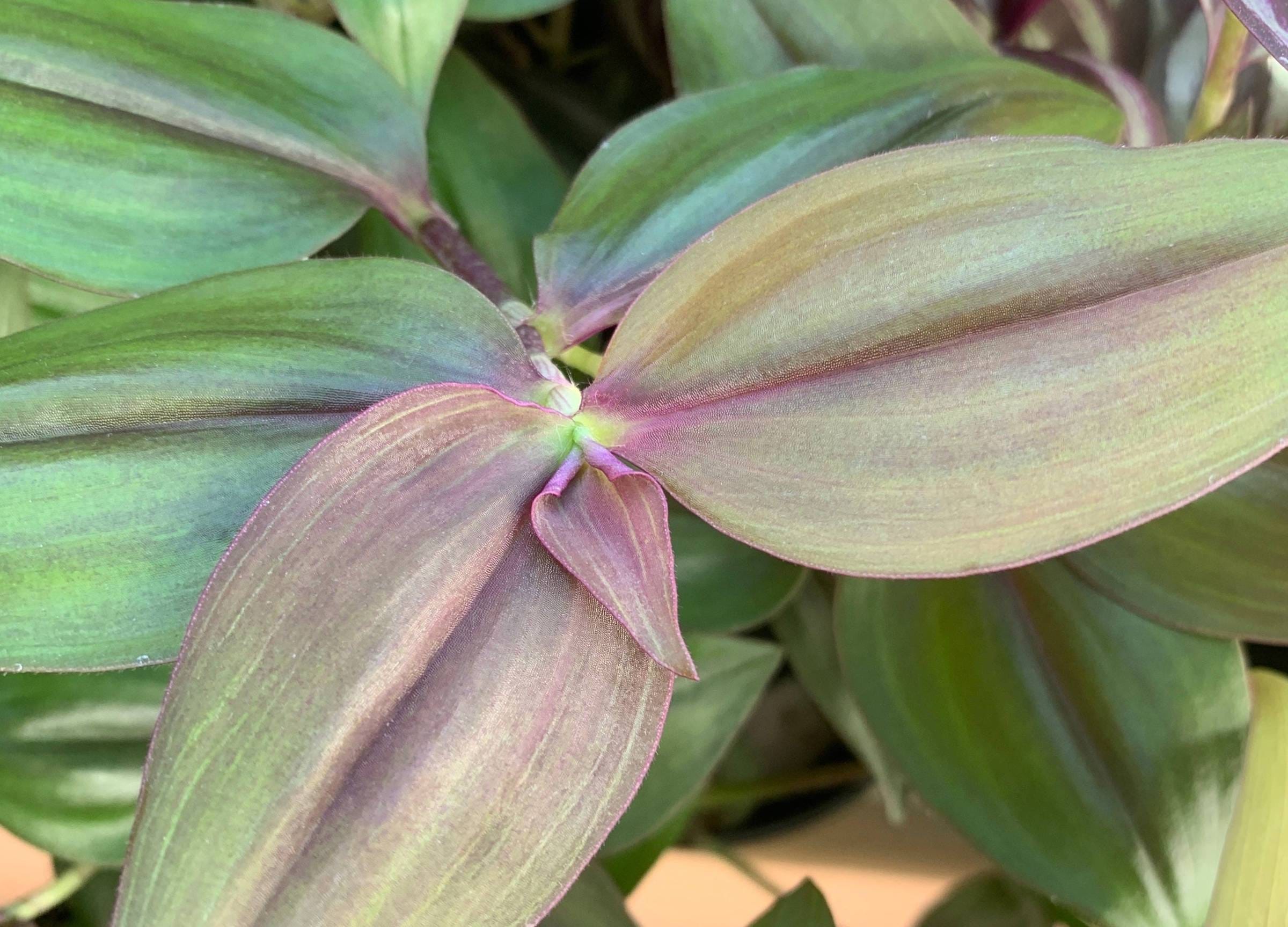
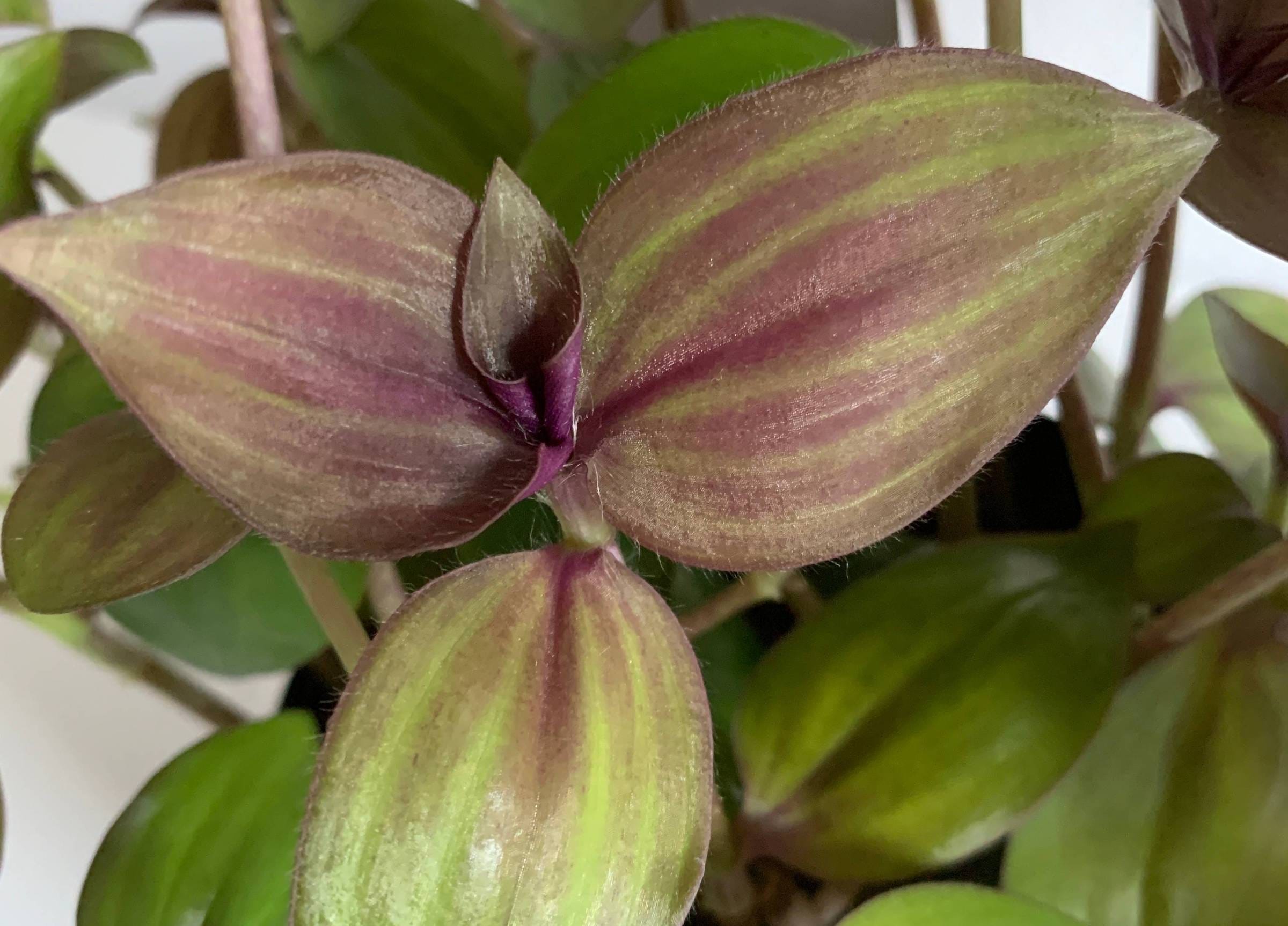
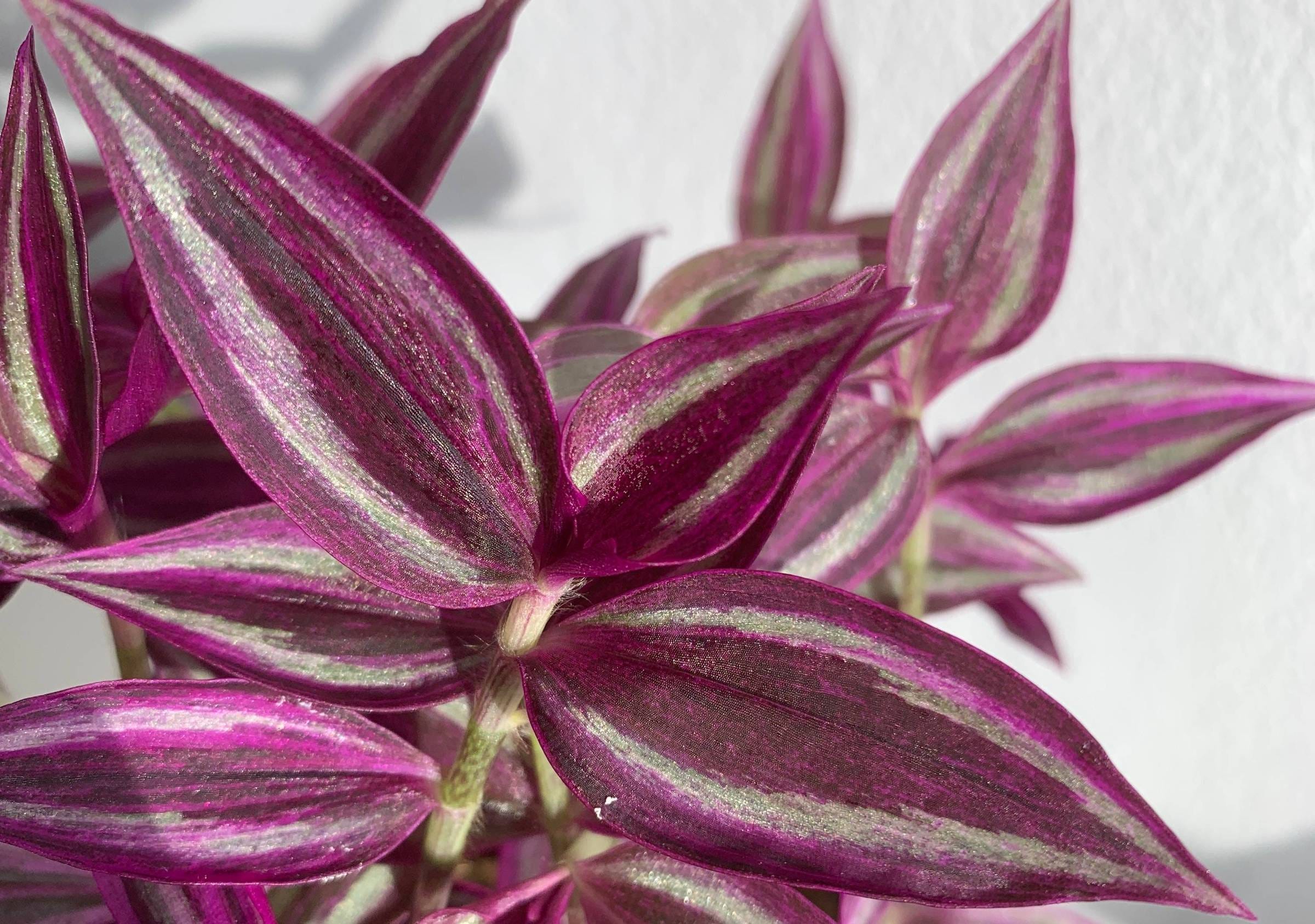
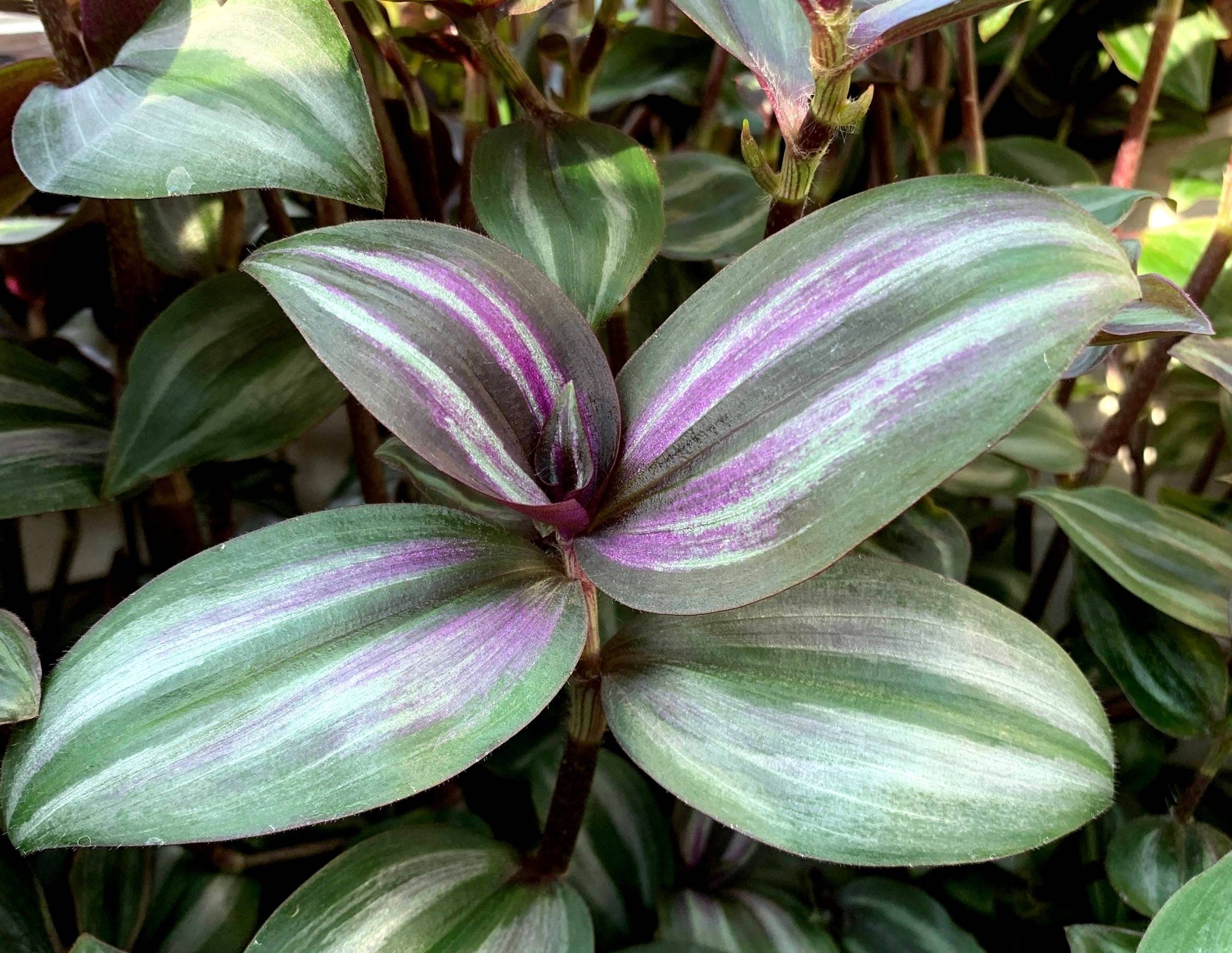
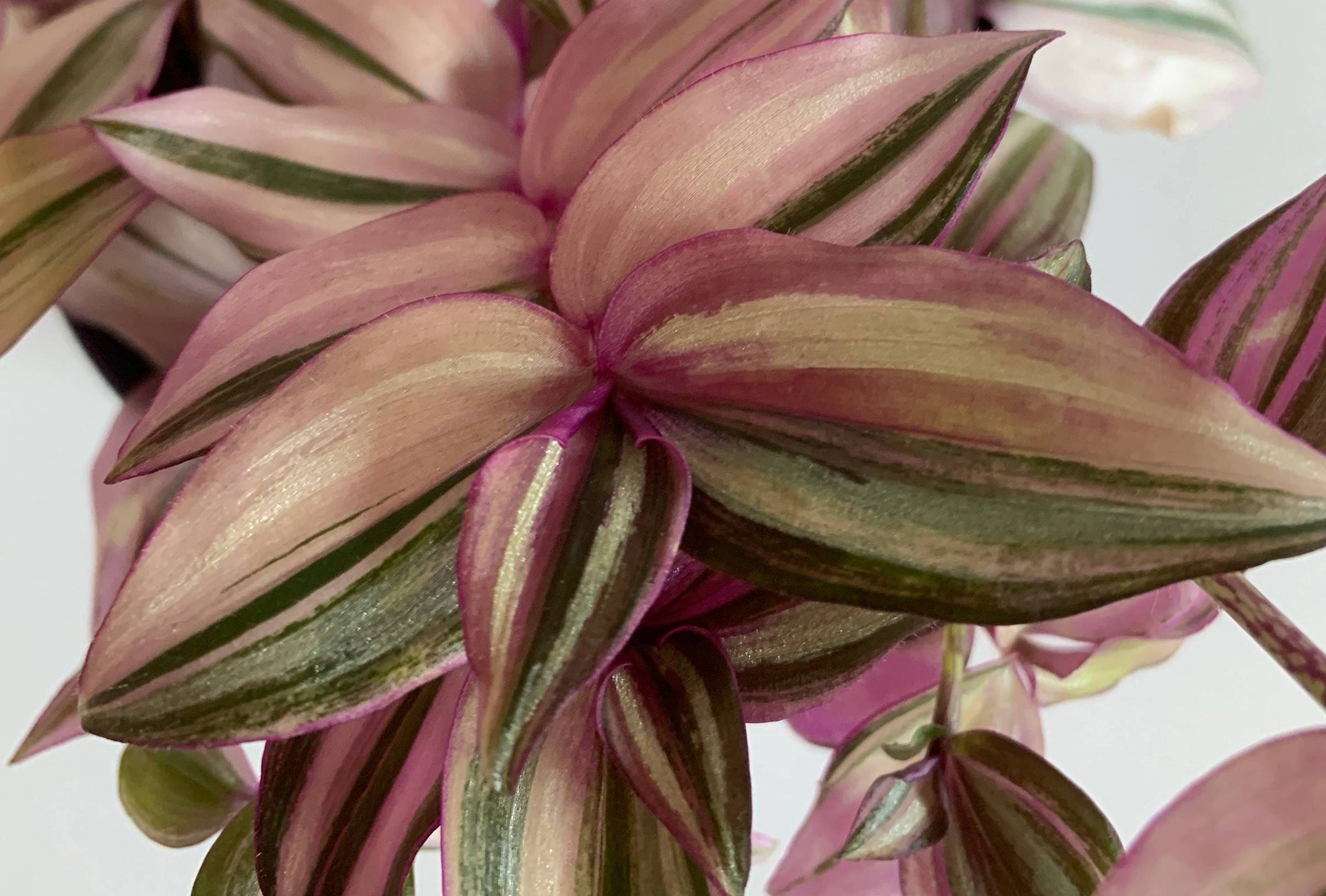
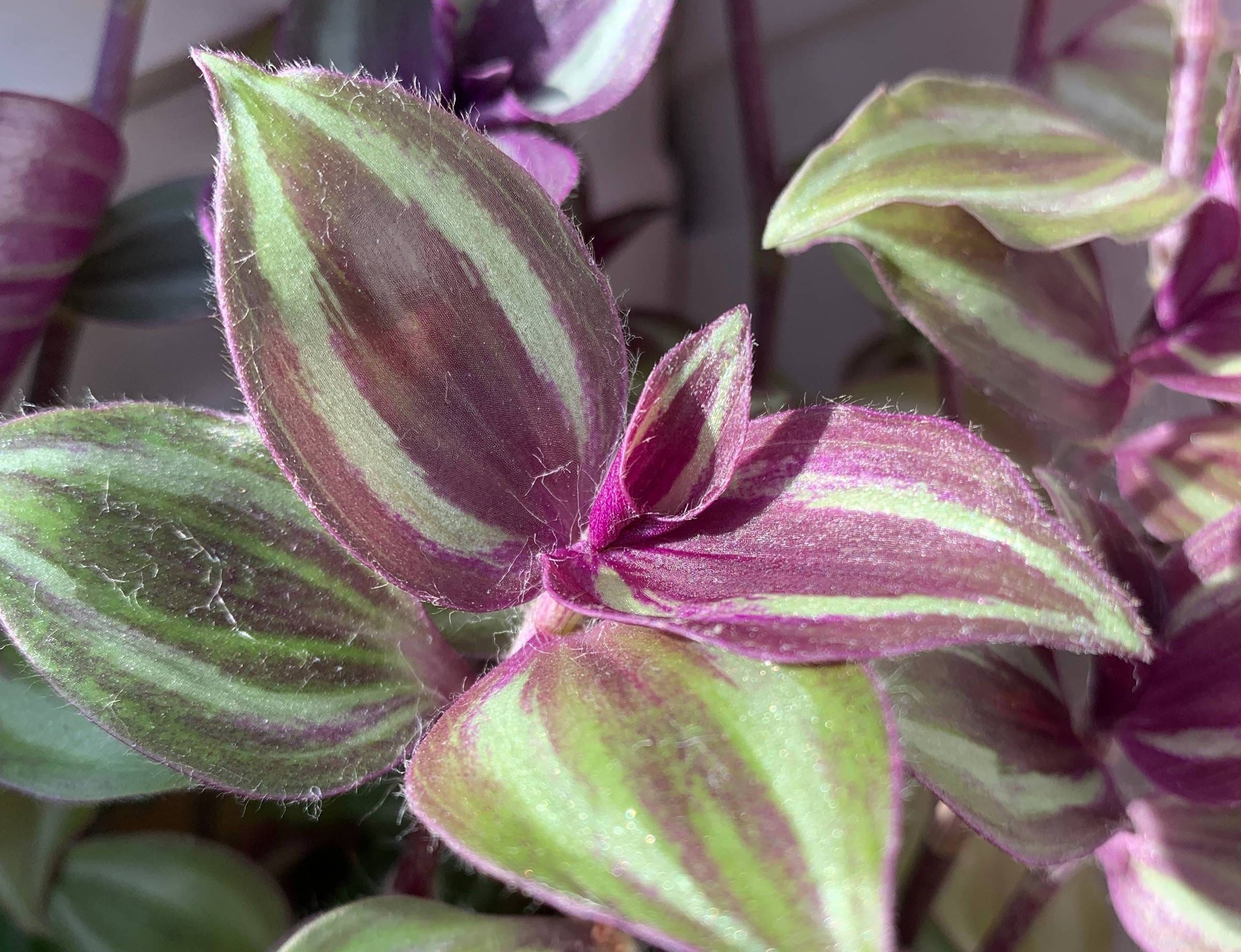
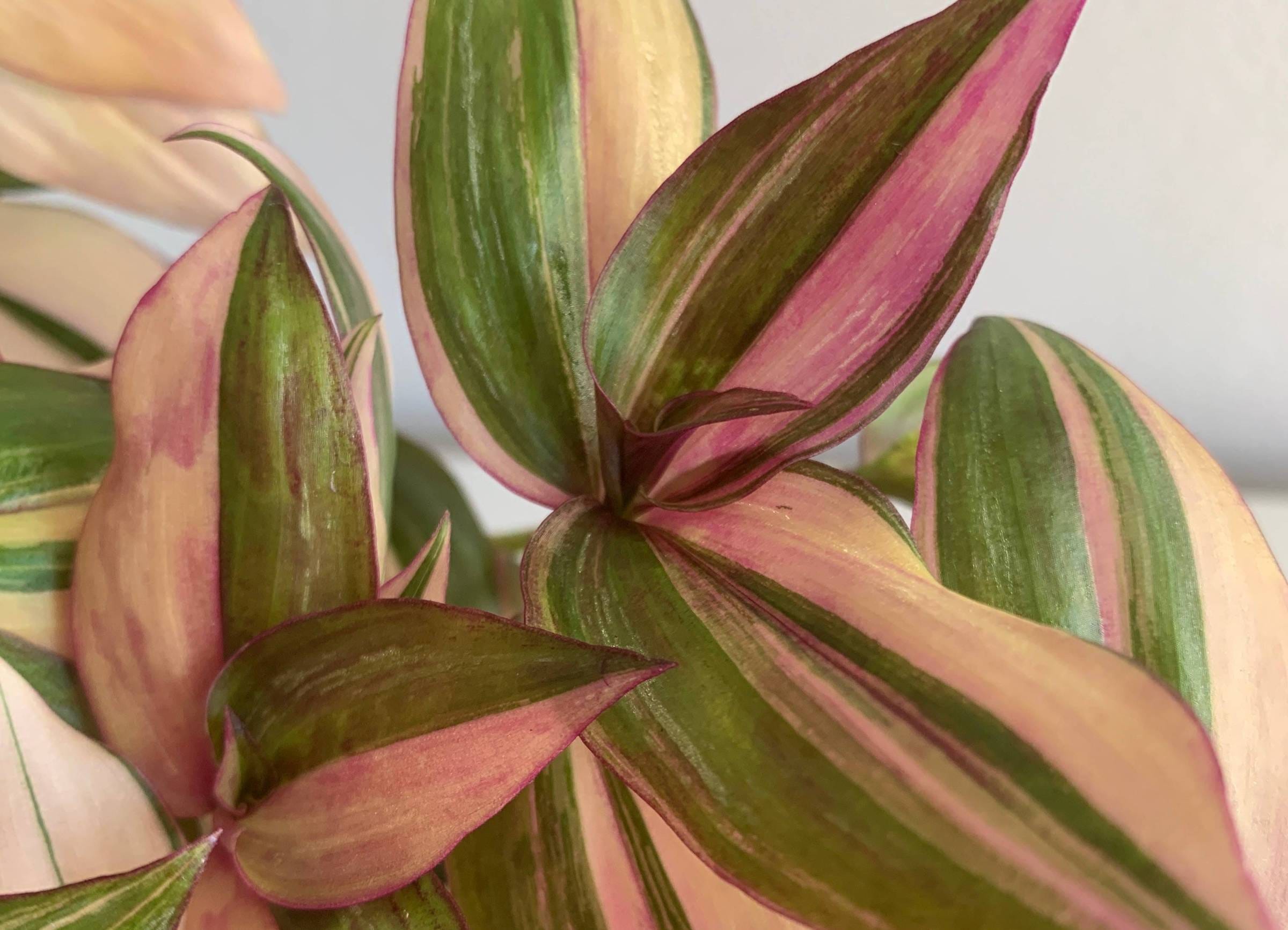
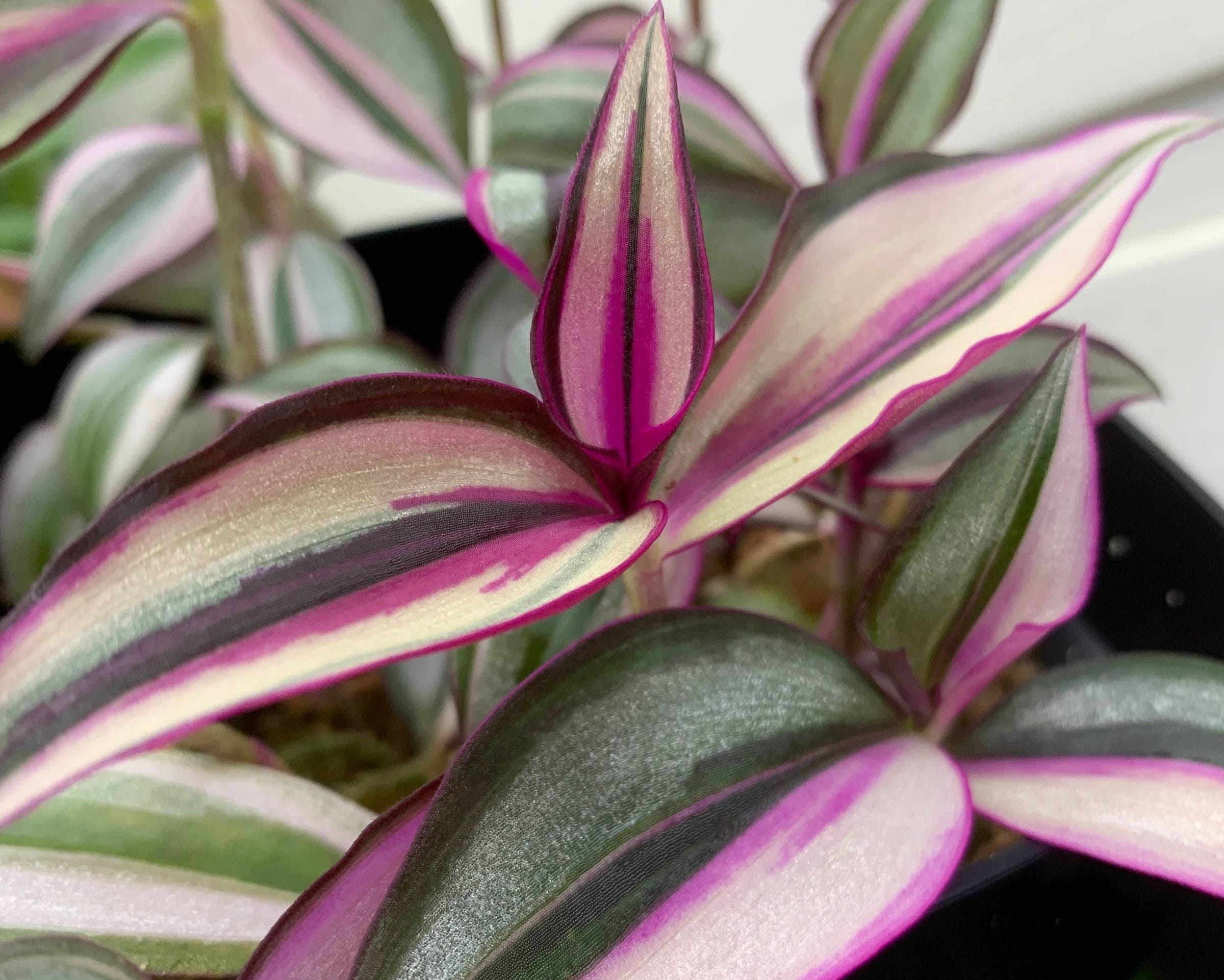
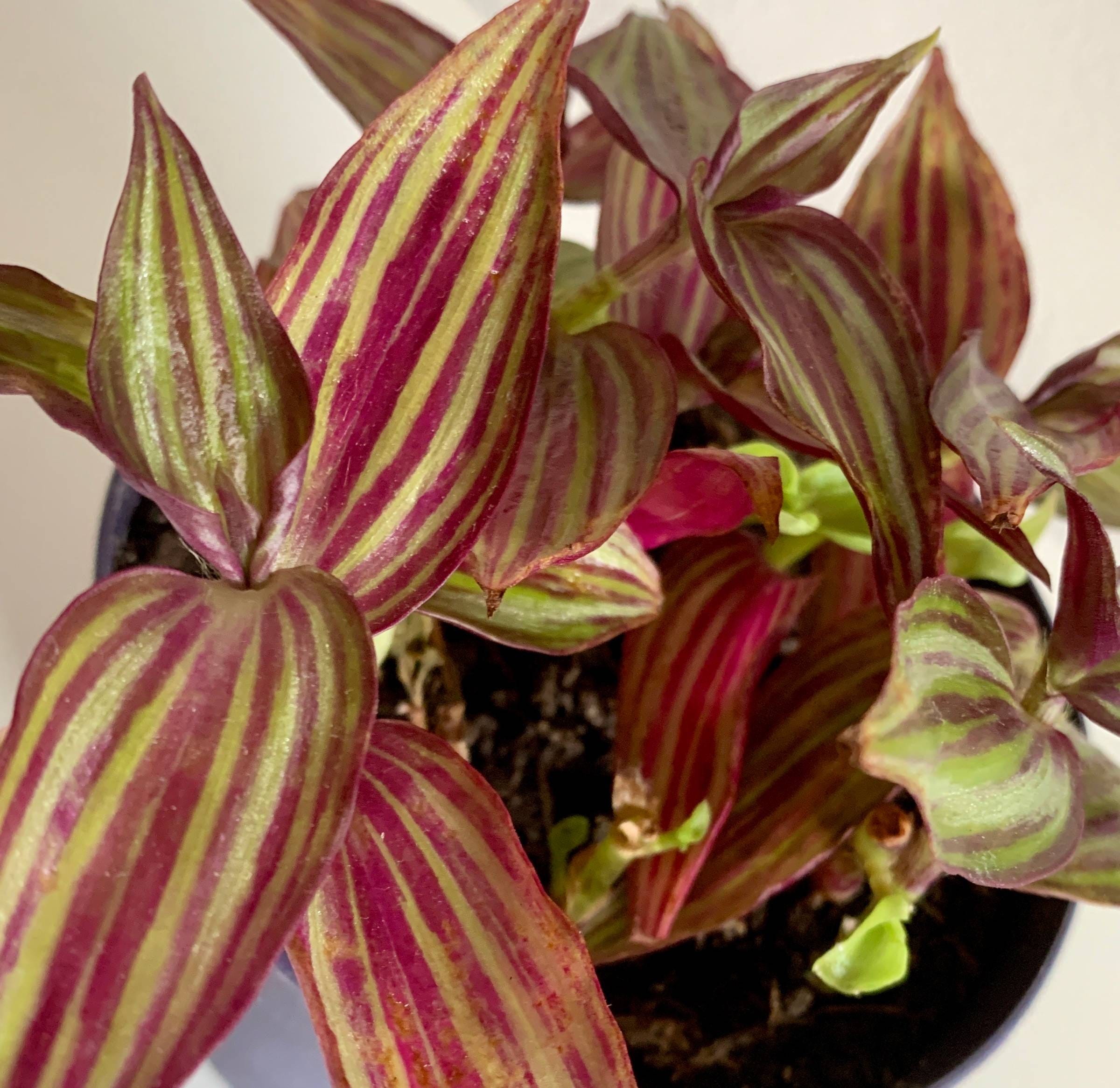
This is not a complete list, like I mentioned earlier, there are 21 different Zebrinas, and these are just a few of them.
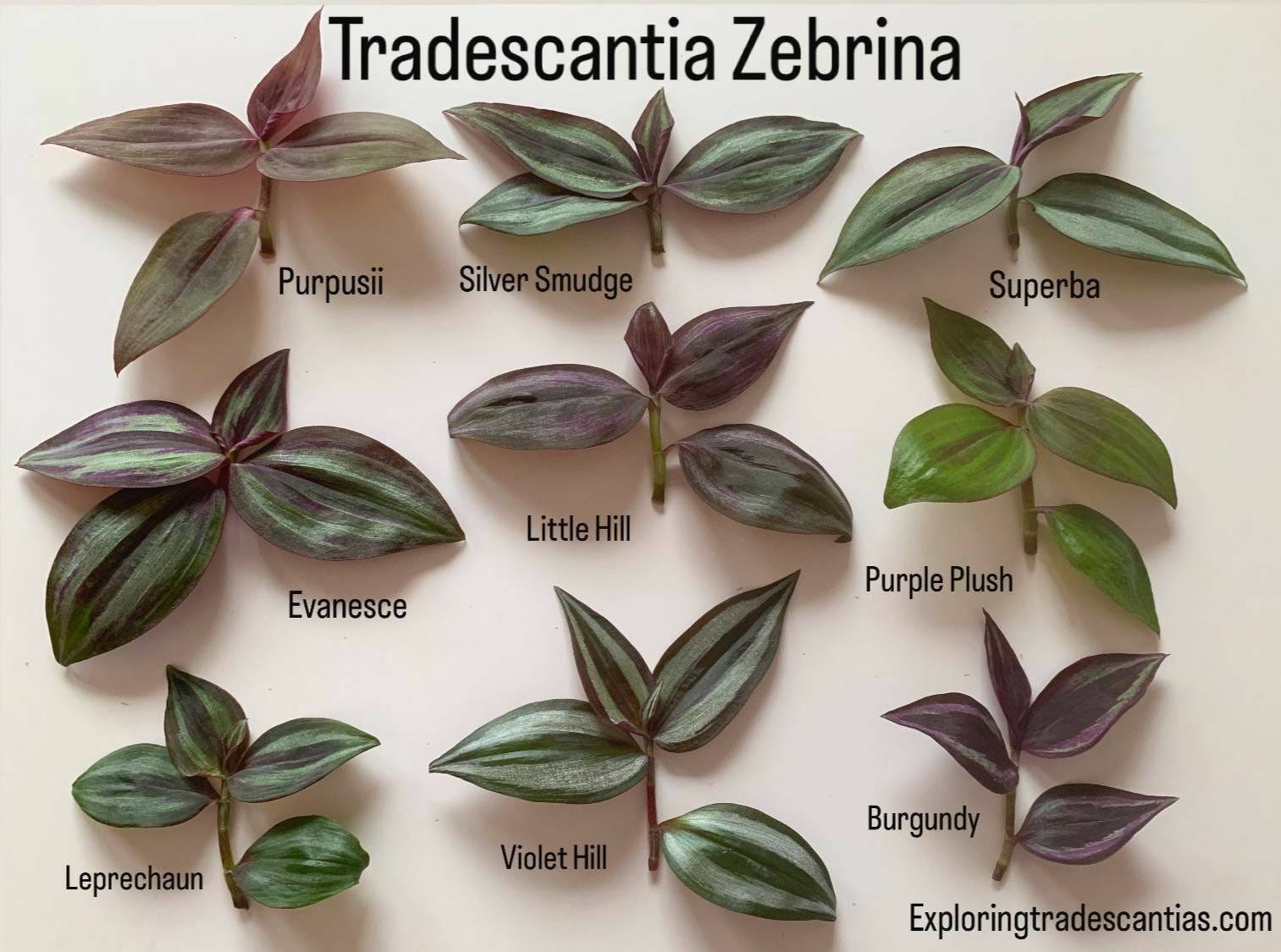
Below are a chart of nine different Tradescantia zebrinas, most of them look almost identical. Charts like this are often used to try and identify Tradescantias, but they’re not very reliable. They usually don’t include all possible varieties, and the plants themselves can look very different depending on their growing conditions.
Unless you know exactly what to look for, it’s almost impossible to make a correct ID from a chart like this. I mostly made it just to show how similar they can be.
How Tradescantia Got Its Name
The name Tradescantia is a tribute to two English botanists, John Tradescant the Elder and his son, John Tradescant the Younger. They lived in the 1600s and were both famous gardeners and plant collectors.
The Tradescants worked as gardeners to the British royal family, including King Charles I of England, and helped design gardens filled with rare and exotic plants. Their job gave them the chance to travel and collect plants from all over the world, including Russia, Africa, and the Americas.
At home in England, they created one of the first botanical gardens with plants from many different countries. They also started a small museum called The Ark, where they displayed not only plants but also stones, shells, and man-made objects they had collected on their travels. It was one of the first public museums in England.
Thanks to their work, passion, and discoveries, the Tradescants helped shape what we now call modern botany. To honor their contributions, the plant genus Tradescantia was named after them.
Until next time, happy planting! 🌿
Katja

Disclaimer: This is an affiliate link, which means I earn a small commission if you make a purchase using my code, at no extra cost to you. Your support helps me keep sharing Tradescantia tips and content—thank you!
