

In my last newsletter, we tackled the troublesome thrips and shared the best strategies to keep them at bay. But as many of you know, thrips aren’t the only pests that can wreak havoc on our beloved Tradescantias. This time, we’re focusing on another common nuisance: fungus gnats.
Fungus gnats might be small, but they can cause big problems if left unchecked. In this newsletter, I’ll cover how to identify, prevent, and treat fungus gnat infestations to keep your Tradescantias thriving and healthy. Read on to arm yourself with the knowledge to combat these pesky invaders!
How do you know if you have a Fungus Gnat infestation?
Fungus gnats are small, dark-colored flies that are often mistaken for fruit flies. Here’s how to identify a fungus gnat infestation:
Adult Gnats:
Adult fungus gnats are about 2-4 millimeters in length. They are often seen flying around the soil surface or near the base of plants, especially when the soil is moist.
Larvae:
The larvae are tiny, translucent worms with black heads and can be found in the top layer of soil. They are usually around 4-6 millimeters long. These larvae feed on organic matter in the soil and can also nibble on plant roots, which can cause significant damage over time.
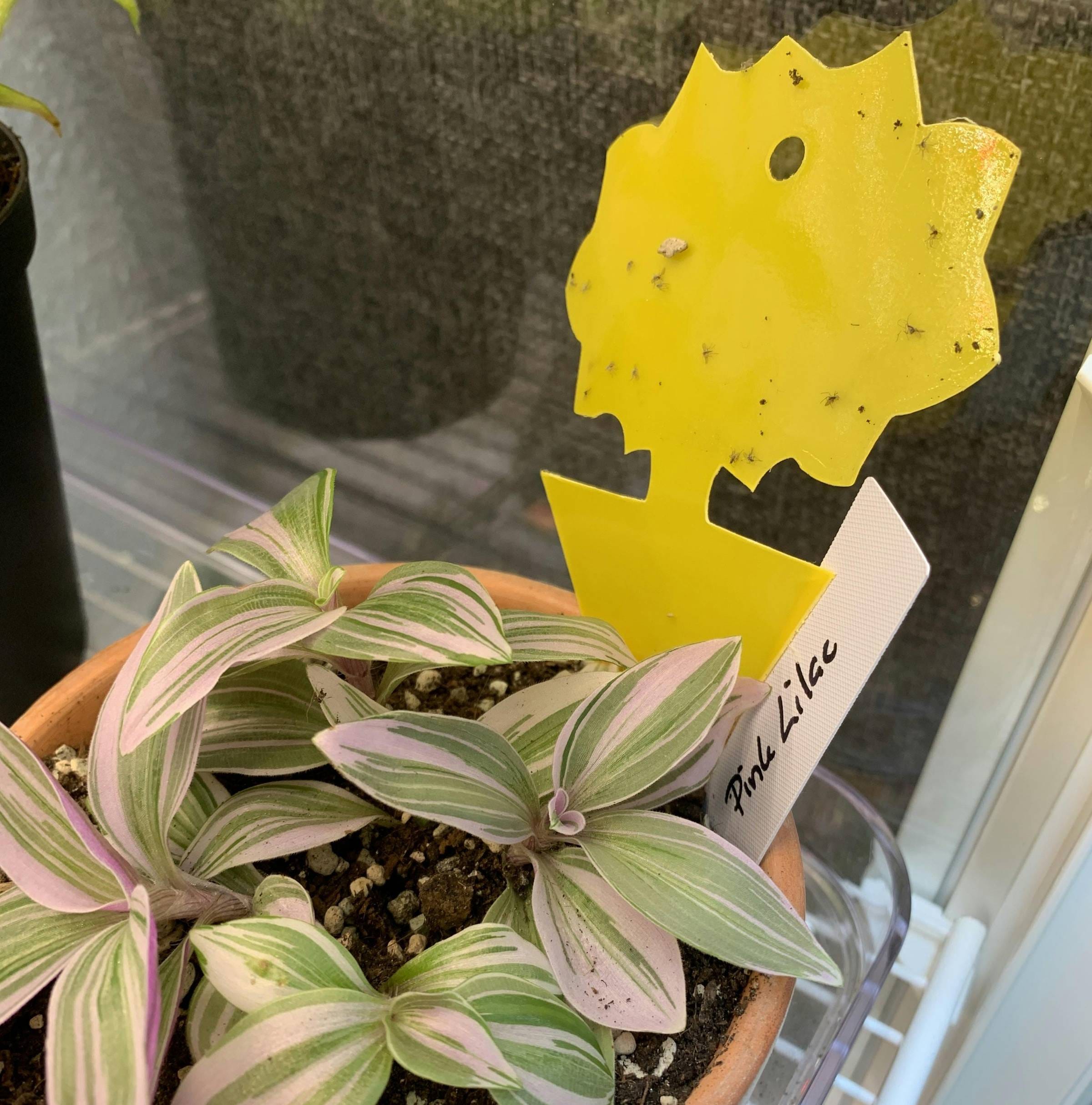
While the larvae might be difficult to see, you might notice small flies taking off when you water your plants or disturb the soil. This is a strong indication that you have fungus gnats. Place yellow sticky traps near your plants. Fungus gnats are attracted to the yellow color and will get stuck on the traps, making it easier to confirm their presence.
Damage Caused by Fungus Gnats
While adult fungus gnats are mostly just annoying, their larvae can actually cause quite a bit of trouble for your plants, especially small plants that haven’t established strong roots yet. Here’s what to watch out for:
Root Damage:
Fungus gnat larvae love to munch on organic matter in the soil, including the tender roots of your plants. This can damage the roots and make it harder for your plant to take up water and nutrients.
Stunted Growth:
If the larvae are nibbling away at the roots, your plant might not grow as well as it should. You might notice your Tradescantia isn’t looking as vibrant or growing as quickly.
Yellowing Leaves:
Damaged roots mean your plant isn’t getting the nutrients it needs, which can lead to yellowing leaves.
Wilting:
In more severe cases, the damage can cause your plant to wilt, even if the soil is properly watered.
Increased Susceptibility to Disease:
When roots are damaged, plants become more vulnerable to soil-borne diseases, which can further weaken your Tradescantias.
Understanding the potential damage caused by fungus gnats helps highlight why it’s so important to catch and deal with these pests early.
How to Get Rid of Fungus Gnats
Dealing with fungus gnats can be a bit tricky, but with the right approach, you can get rid of them and keep your Tradescantias happy. Here are some effective strategies:
Let the Soil Dry Out:
Fungus gnats thrive in moist environments, so letting the soil dry out between waterings should minimize their presence. This is also the watering routine I recommend for Tradescantias, so doing this is good for both your plant and reducing gnats. It doesn’t solve the problem completely—there are always some annoying ones that seem to survive—but it makes the soil less attractive to the gnats and helps reduce their population.
Yellow Sticky Traps:
Yellow sticky traps don’t solve the problem entirely either, but they’re a good complement to other treatments. These traps attract adult gnats and capture them, helping to reduce the breeding population. It’s an easy way to both monitor the size of the infestation and control the gnats.
BTI Drops:
There is a biological insecticide called Bacillus thuringiensis israelensis (BTI) that has become quite popular lately. BTI is a naturally occurring bacterium that targets fungus gnat larvae and other soil-dwelling pests. It’s safe for your plants and the environment. I haven’t been able to find this in Sweden, but I know it’s available in many other places.
Neem Oil:
I haven’t tried this myself, but according to others who have, neem oil can be effective against fungus gnat larvae. Mix neem oil with water according to the instructions and water your plants with this solution. It helps kill the larvae and reduce the infestation. Just don’t spray your Tradescantias with this solution, as some of them are sensitive to neem oil on their leaves.
Nematodes:
This is my favorite method to get rid of the gnats! Beneficial nematodes are microscopic worms that naturally target and kill fungus gnat larvae. They are harmless to plants and humans and can be a very effective biological control method. It takes up to two weeks to see the full result, and it might need to be repeated after a few weeks, but I find this really effective and easy to do.
Carnivorous Plants:
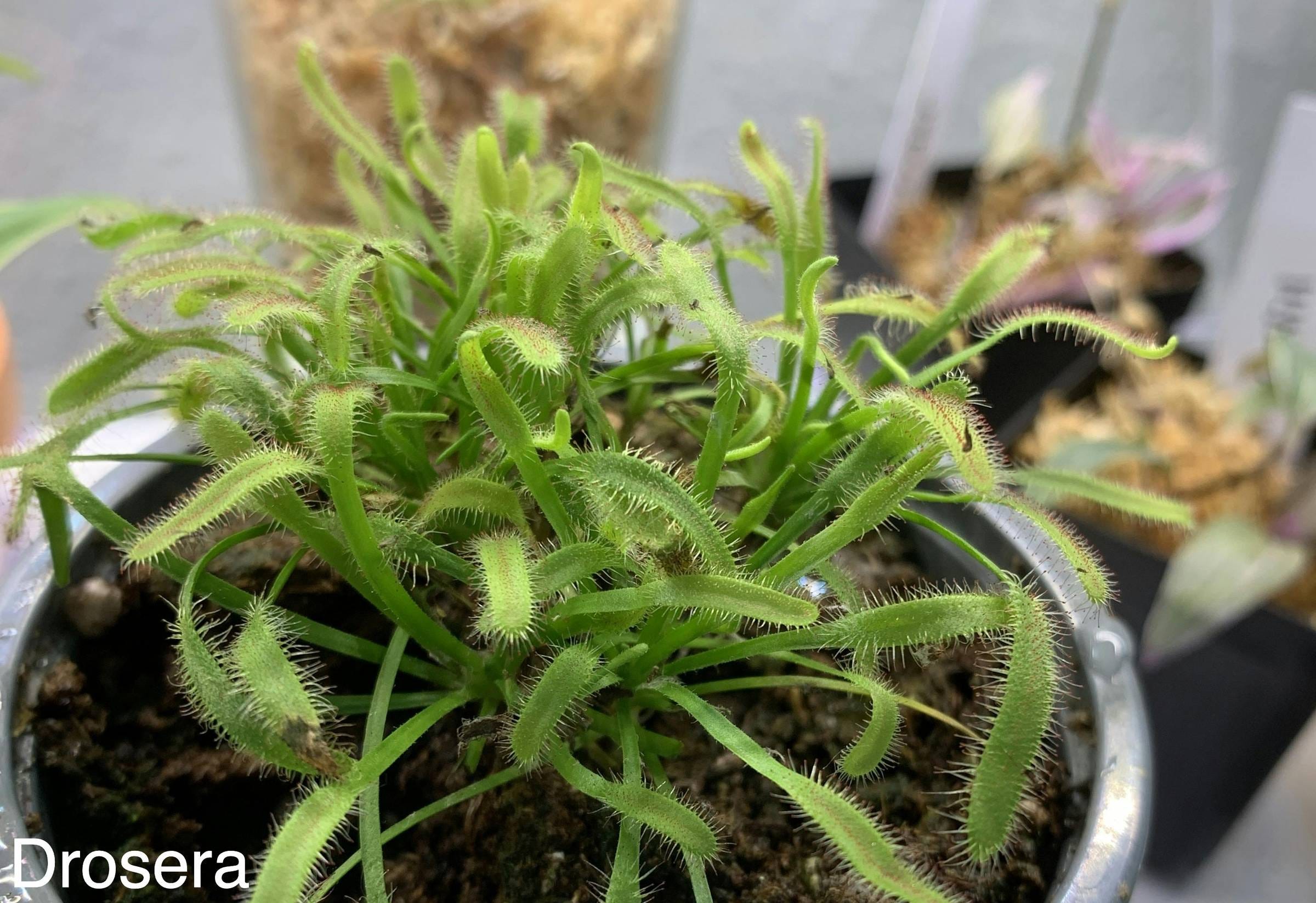
Carnivorous plants can also be effective against fungus gnats. Certain types of carnivorous plants, like sundews and butterworts (Drosera and Pinguicula), are particularly good at catching these pesky insects. They have sticky leaves that trap and digest fungus gnats, helping to reduce their population naturally. My first carnivorous plant was a pitcher plant, but I soon learned that they’re not the best for fungus gnats but for bigger flies, just like Venus flytraps.
Using Stones in Pots to Prevent Fungus Gnats
You may have heard the suggestion to place a layer of stones on top of the soil to prevent fungus gnats. The idea is that the stones create a barrier that discourages adult gnats from laying eggs in the soil. However, I’m a bit skeptical about this method for a couple of reasons.
Firstly, while the stones might create a physical barrier, they can also trap moisture underneath, creating an even better environment for fungus gnat larvae to thrive. Fungus gnats love moist conditions, so anything that keeps the soil damp for longer periods can actually worsen the problem.
Secondly, if you’re like me and frequently take cuttings and replant them directly back into the pot, having a layer of stones can be quite inconvenient. It makes the process of planting and replanting more cumbersome and can disrupt the barrier each time you add a new cutting.
Overall, while using stones might help in some cases, I find it more practical to focus on other methods
Wrapping Up
I hope these tips help you keep your Tradescantias free from fungus gnats and thriving. But our pest control journey doesn’t end here! In two weeks, I’ll be back with Part 3, where we’ll explore how to deal with other common pests that can affect your plants and how to tackle them effectively.
Thank you for reading!
If you haven’t already, make sure to subscribe so you don’t miss out on the next part!
Happy gardening, and see you next time!
/Katja