

Most people think of Tradescantias as tropical houseplants with colourful leaves. The kind that trail from hanging pots or sit in bright windows, grown mainly for their beautiful foliage.
But there is another side of tje Tradescantia genus that many people never hear about. Tradescantias that do not live indoors at all. Instead, they grow outside in the garden, come back year after year, and produce some of the most beautiful flowers.
These are the frost hardy Tradescantias, like Andersoniana, Virginiana, and Ohiensis.
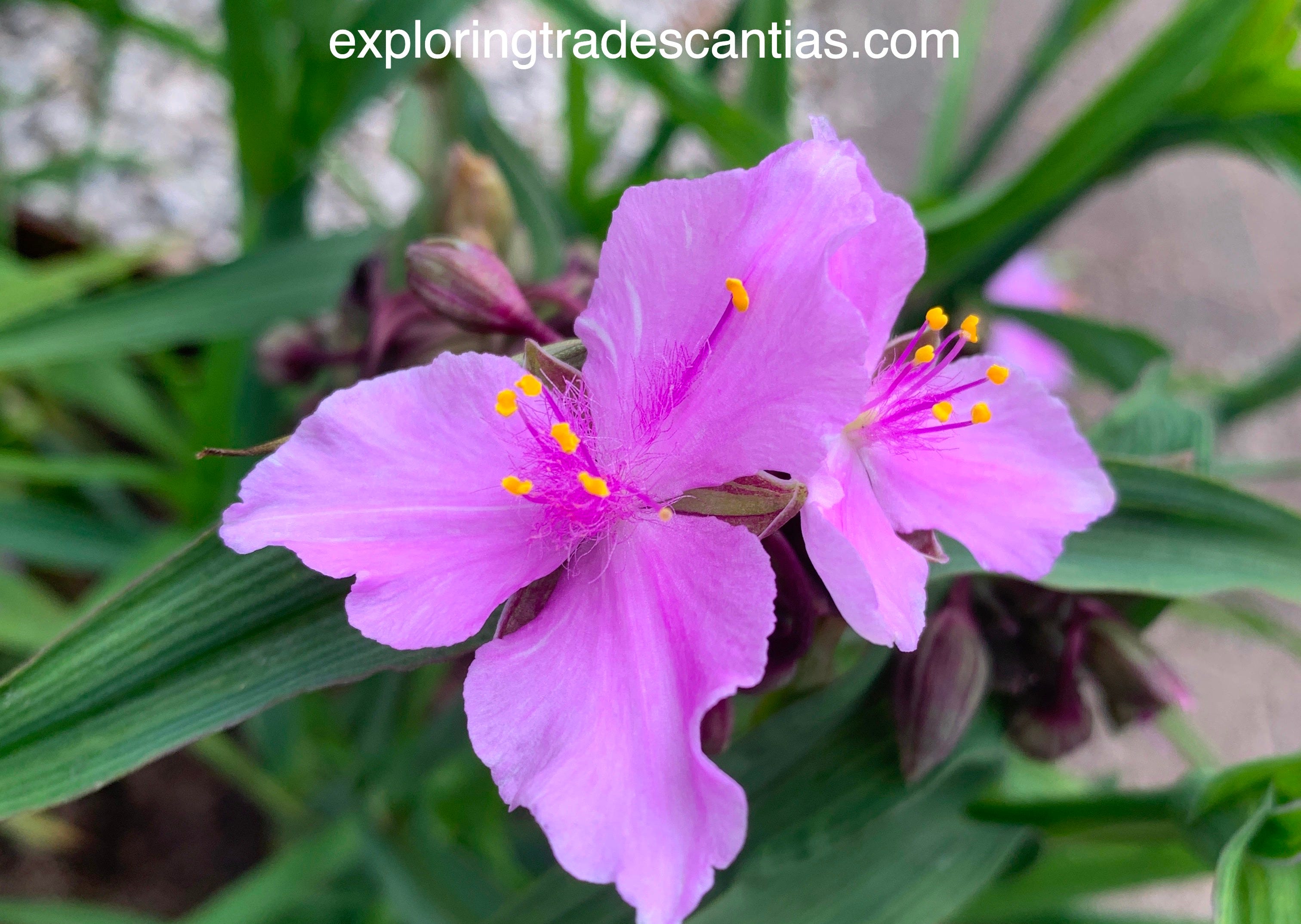
What Are Frost Hardy Tradescantias?
Most Tradescantias come from warmer climates and are grown indoors as houseplants. But some species come from North America and Mexico and can handle cold temperatures. These are the frost hardy Tradescantias.
The most well known ones are Tradescantia Virginiana, Tradescantia Ohiensis, and the hybrid group Tradescantia Andersoniana. In the wild, these plants grow in open areas such as grasslands, but they have also become popular garden plants.
These species are perennial plants with upright stems, long grass like leaves, and a clumping growth habit.
Unlike the tropical Tradescantias we grow for their colourful leaves, these are mainly grown for their flowers. The blooms usually range from blue, purple, white, and pink and have the classic three petals that Tradescantias are known for. Each flower only lasts a day, but the plants keep producing new ones all summer.
They die back completely in winter, which can look a little dramatic the first time you see it. But the roots stay alive underground, waiting for warmer days to return.
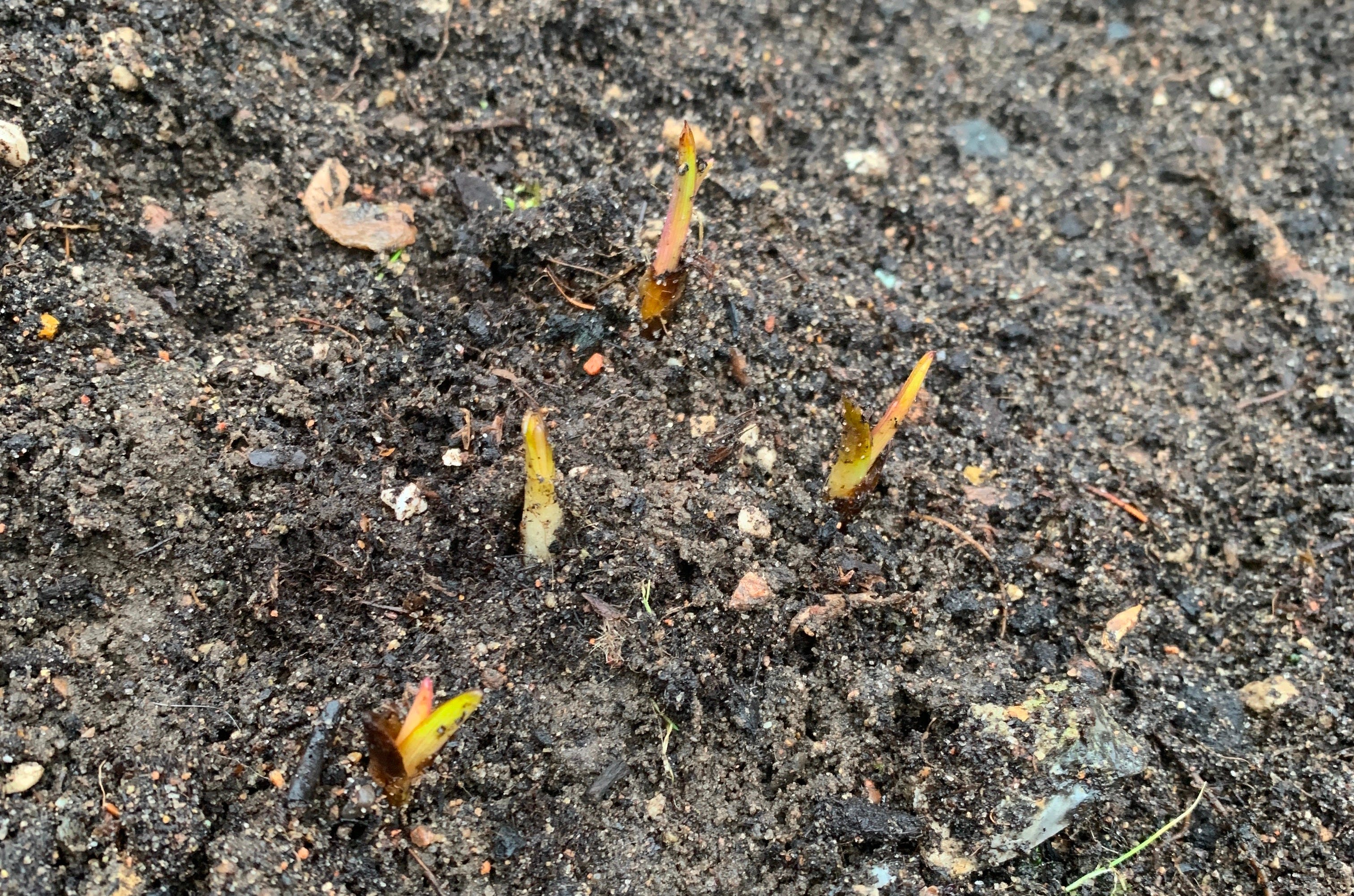
When spring finally arrives, new shoots slowly start to appear from the soil. Every year the clump becomes a little bigger, and the plant gets stronger and fuller.
There are around 30 species in total, along with a large number of cultivars that are grown as hardy garden plants.
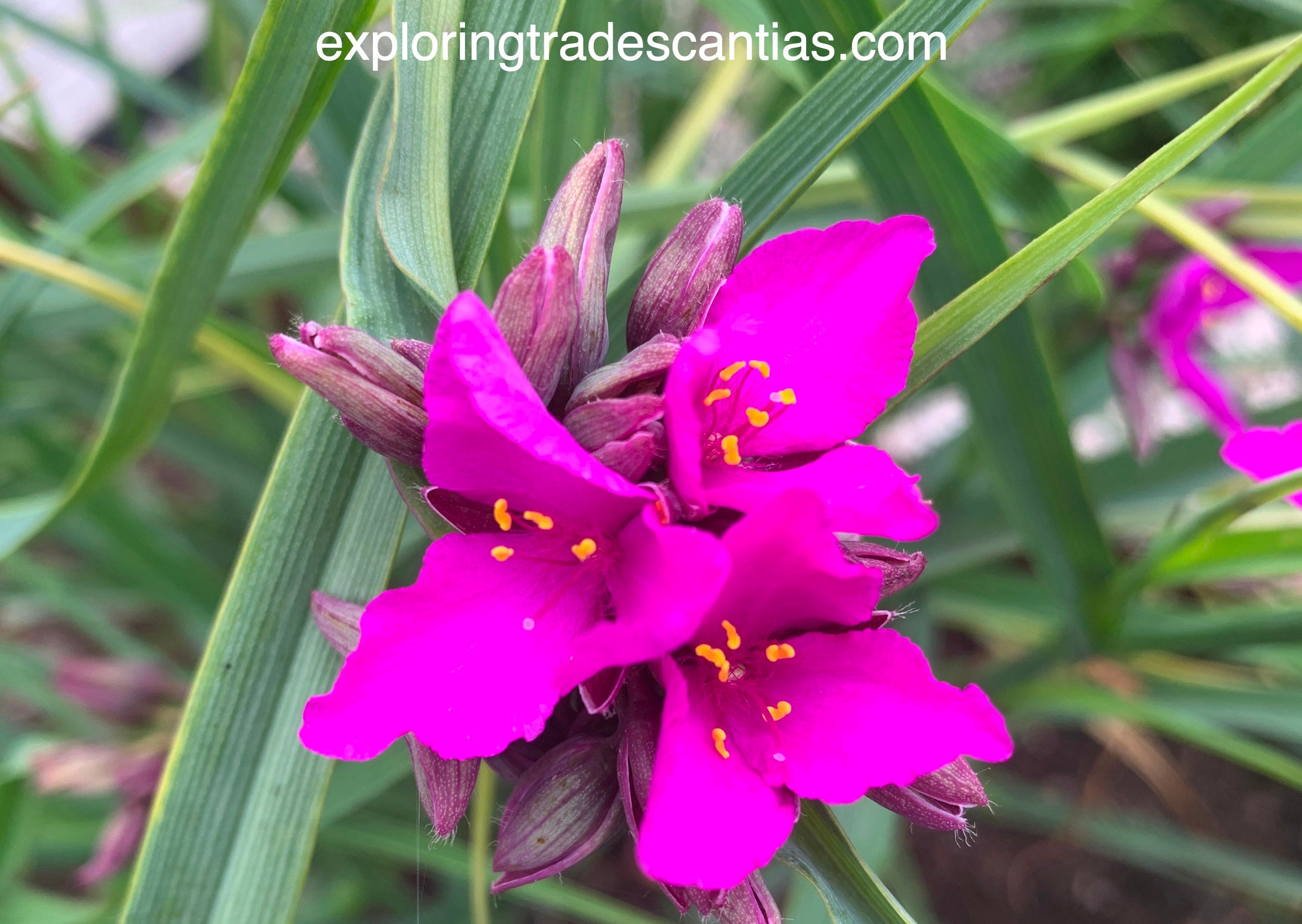
How They Differ From Tropical Tradescantias
If you mostly grow Tradescantias indoors, Andersonianas and the other hardy species might look a little surprising at first. They are quite different from the tropical varieties many of us keep as houseplants.
Tropical Tradescantias are usually grown for their colourful foliage. They have leaves in all kinds of colours and patterns, and often grow in a creeping way, crawling along the ground and putting down roots wherever they touch. This makes them perfect for hanging pots. Hardy Tradescantias, on the other hand, grow upright in clumps and have long, grass like leaves.
Another big difference is what we grow them for. Tropical Tradescantias are loved for their leaf colours and patterns, while hardy Tradescantias are mainly grown for their flowers. One thing they do have in common is that each flower only lasts one day. But the plants produce new ones constantly, which means they can flower for weeks or even months.
And of course, the biggest difference is that these Tradescantias can survive freezing temperatures, something the tropical ones simply cannot do
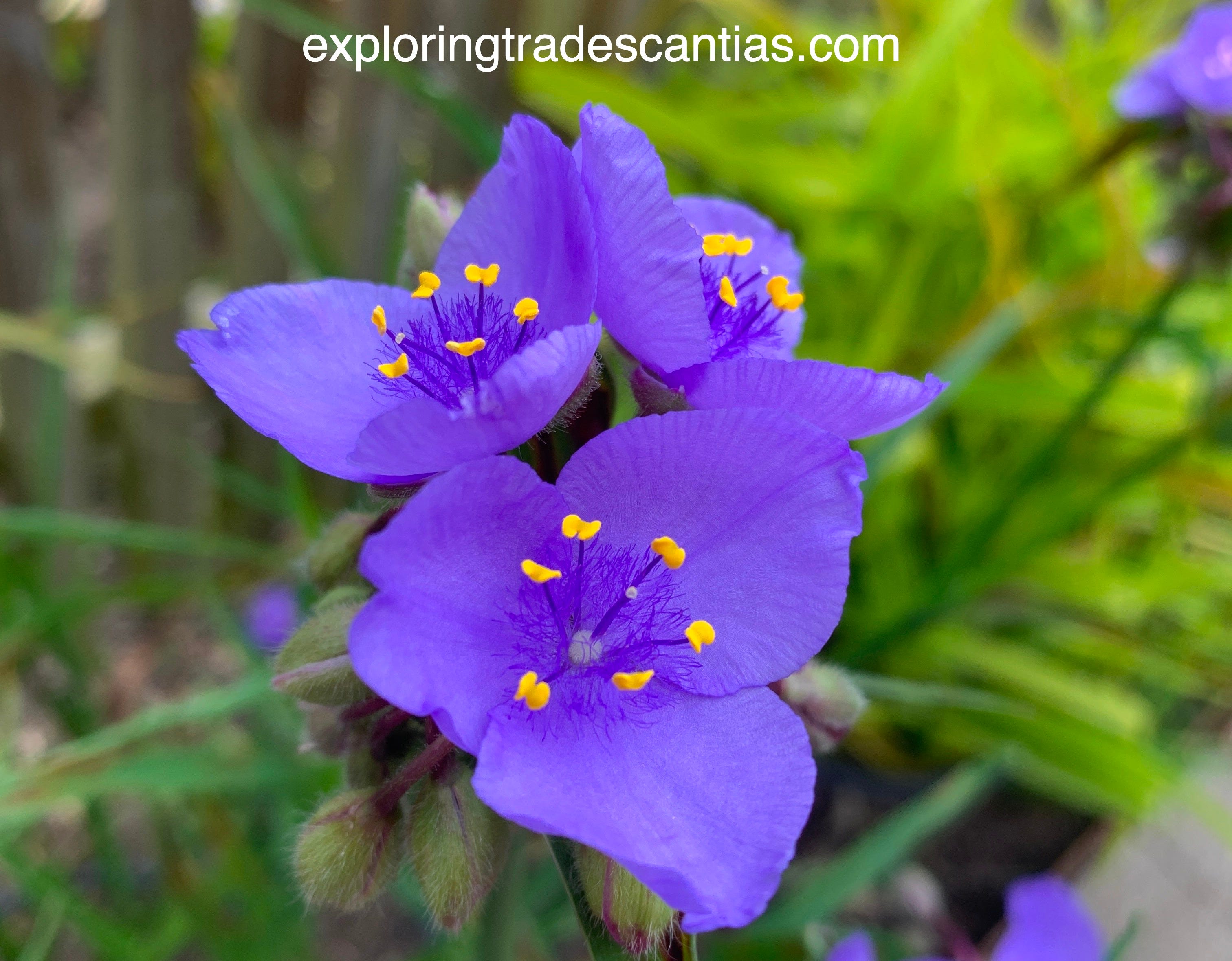
Why I Love Andersonianas
I only started my Andersoniana journey two years ago, when I bought my first two plants, Bilberry Ice and Ocean Blue. I did not know what to expect, but I quickly fell in love with their colourful flowers.
For me, Andersonianas are a perfect way to bring Tradescantias into the garden. After spending so much time growing the tropical ones indoors, it feels a bit magical to see a Tradescantia thriving outside year after year. I do not have to watch them die back every winter like the tropical ones I plant outdoors, because I know they will return in spring.
What I love most is the flowers. They may only last for a day, but the plants keep producing new ones constantly, which means they can flower all summer long. Some varieties have soft pink flowers, others deep purple or bright blue, and they always catch my eye when I walk through the garden. Their flowers are also bigger than those of the tropical ones.
I also love how easy they are to grow. Once established, they mostly take care of themselves. Every winter the foliage disappears completely, and every spring they come back again as if nothing happened
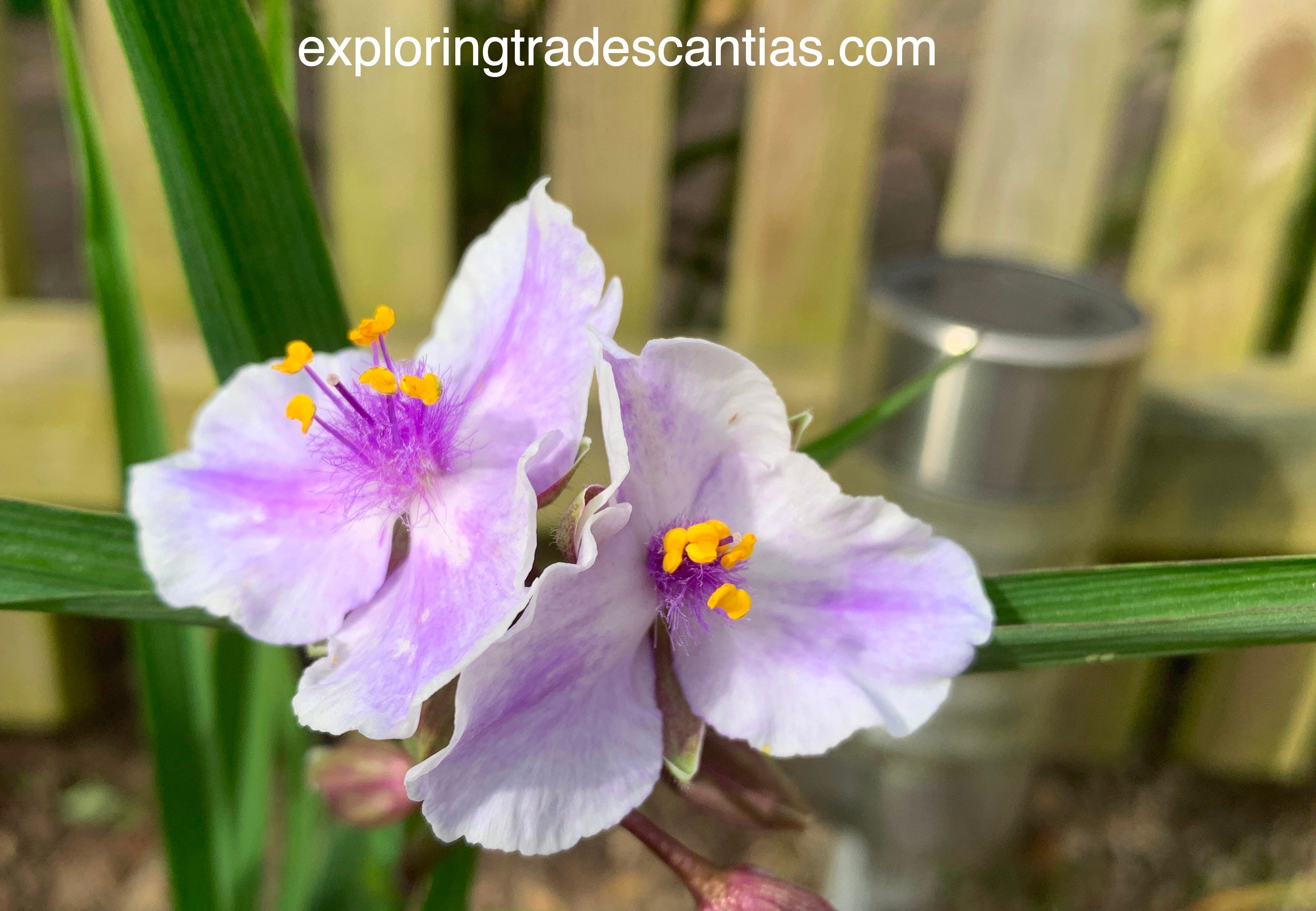
Care Tips
Andersonianas are very easy plants to grow, which is one of the reasons I enjoy them so much. Once established in the garden, they are quite forgiving and do well in many different conditions.
They grow best in a bright spot. Full sun usually gives the most flowers, but they also grow well in partial shade. If the plant gets less light, it will still grow nicely, but it may produce fewer blooms.
The soil should be moist but well draining. Andersonianas are not very picky and can grow in many different soil types, but they do best in soil that holds some moisture without staying wet for too long. Adding compost can help improve the soil and give the plants extra nutrients.
During warm periods it is a good idea to water them regularly, especially if the weather is dry. While they can handle short dry spells, they grow and flower much better when the soil stays slightly moist.
They also do not need much fertilizer. Feeding them once in early spring, when new growth begins, is usually enough for the whole season. You can also add a little compost during the summer if you want to give them an extra boost.
One final tip is to give them enough space. Andersonianas grow in clumps and slowly spread over time, so planting them directly in the ground usually works better than growing them in pots.
However, once they are planted in the ground it can be difficult to get rid of them. Their roots spread underground and can travel quite far, so you may find new shoots popping up some distance from where you first planted them.
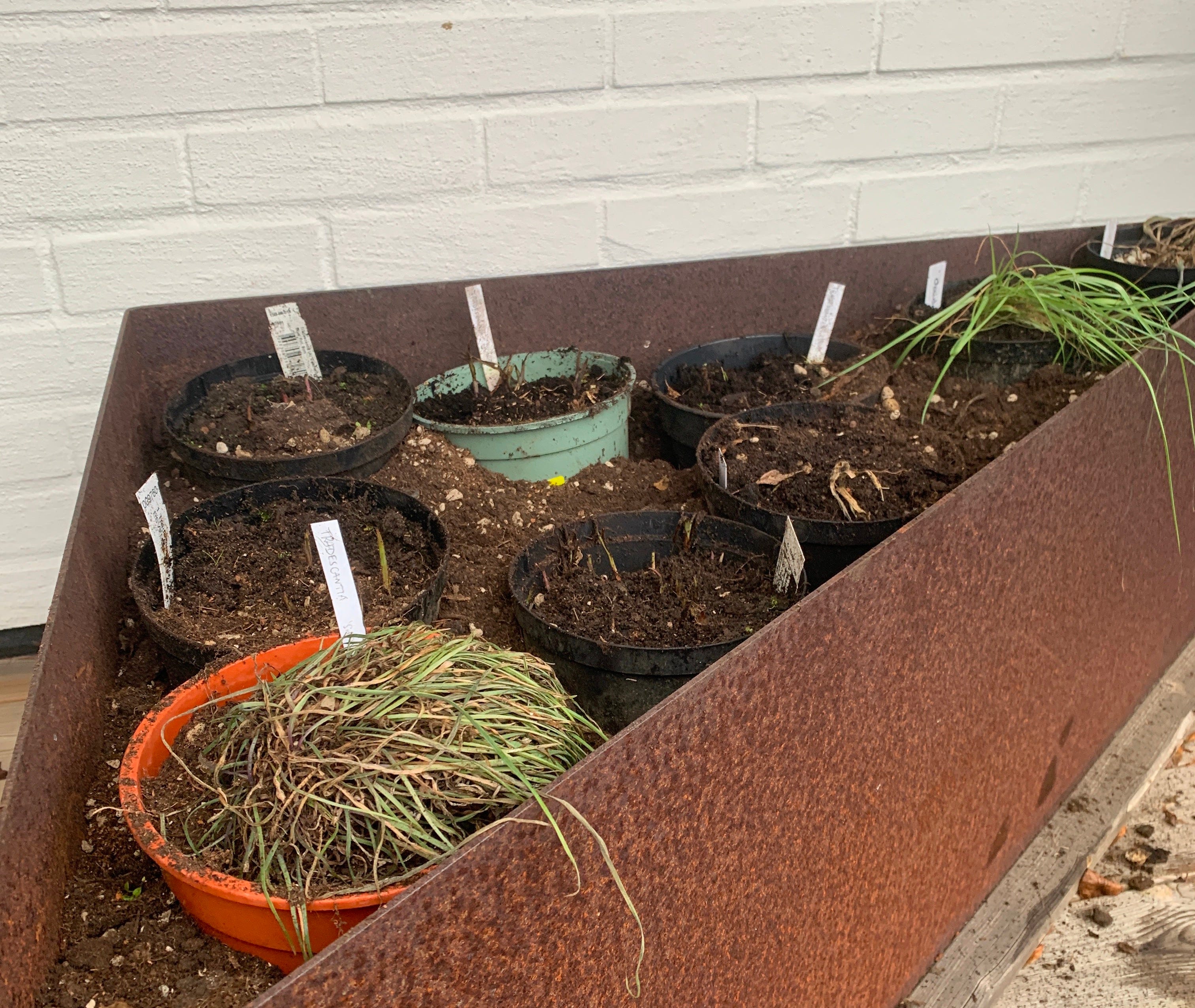
Because of this, when I am unsure if I want to plant one permanently, I keep it in a large nursery pot that I sink into the ground. The roots can still grow through the drainage holes, but it keeps the plant a bit more contained for a while
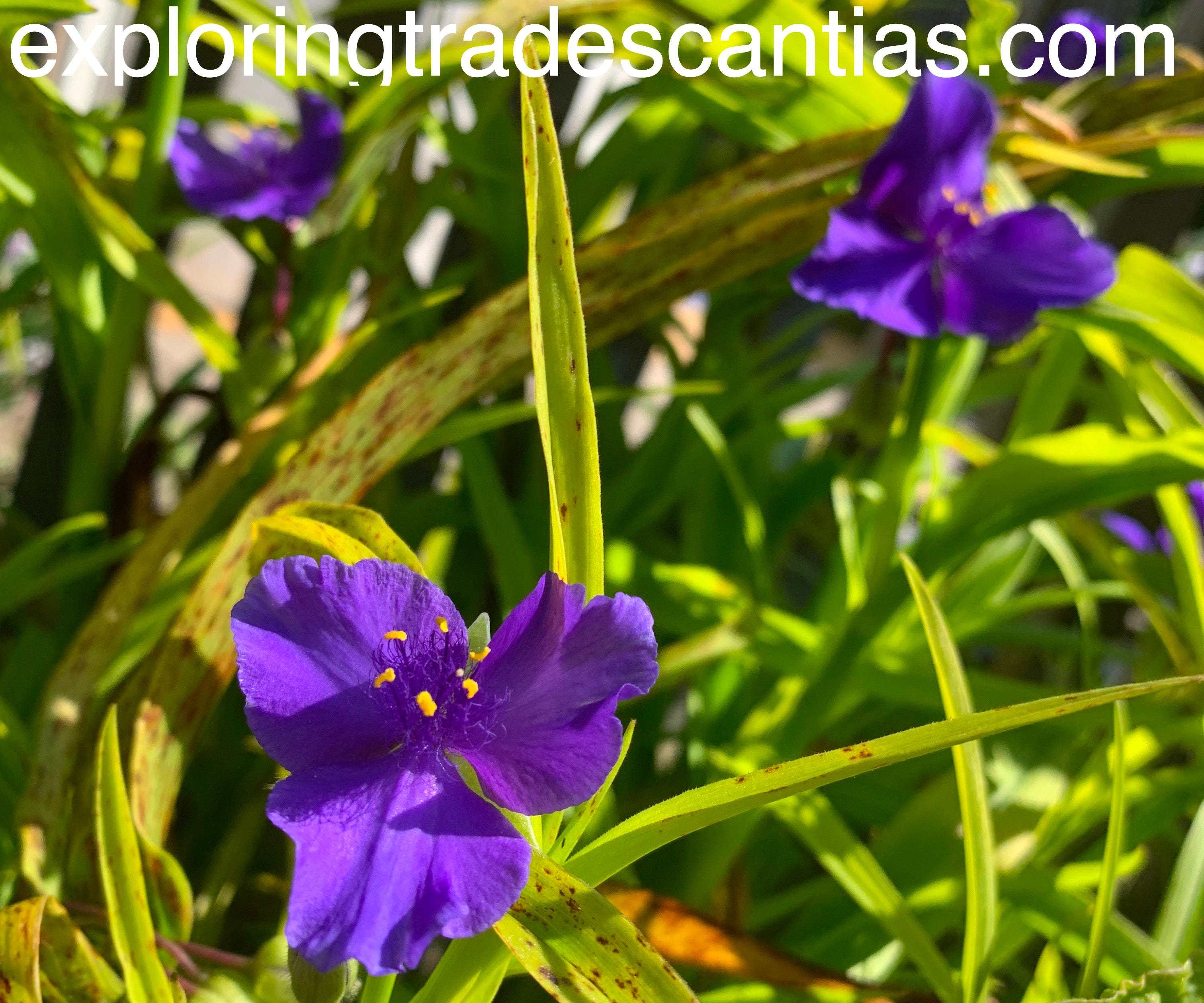
My Andersonianas
Over the past couple of years I have slowly collected quite a few Andersonianas. By now I have close to 30 different varieties, plus one Tradescantia ohiensis and one Tradescantia virginiana.
I seem to have a soft spot for the pink and white varieties. They look so delicate in the garden and really stand out among all the green. That said, the deep purple colour of Sweet Kate is also absolutely beautiful and impossible to ignore when it is in flower.
I was a little worried after this winter, which was unusually cold. Andersonianas are supposed to tolerate frost, but I have heard mixed things about how much cold they can actually handle.
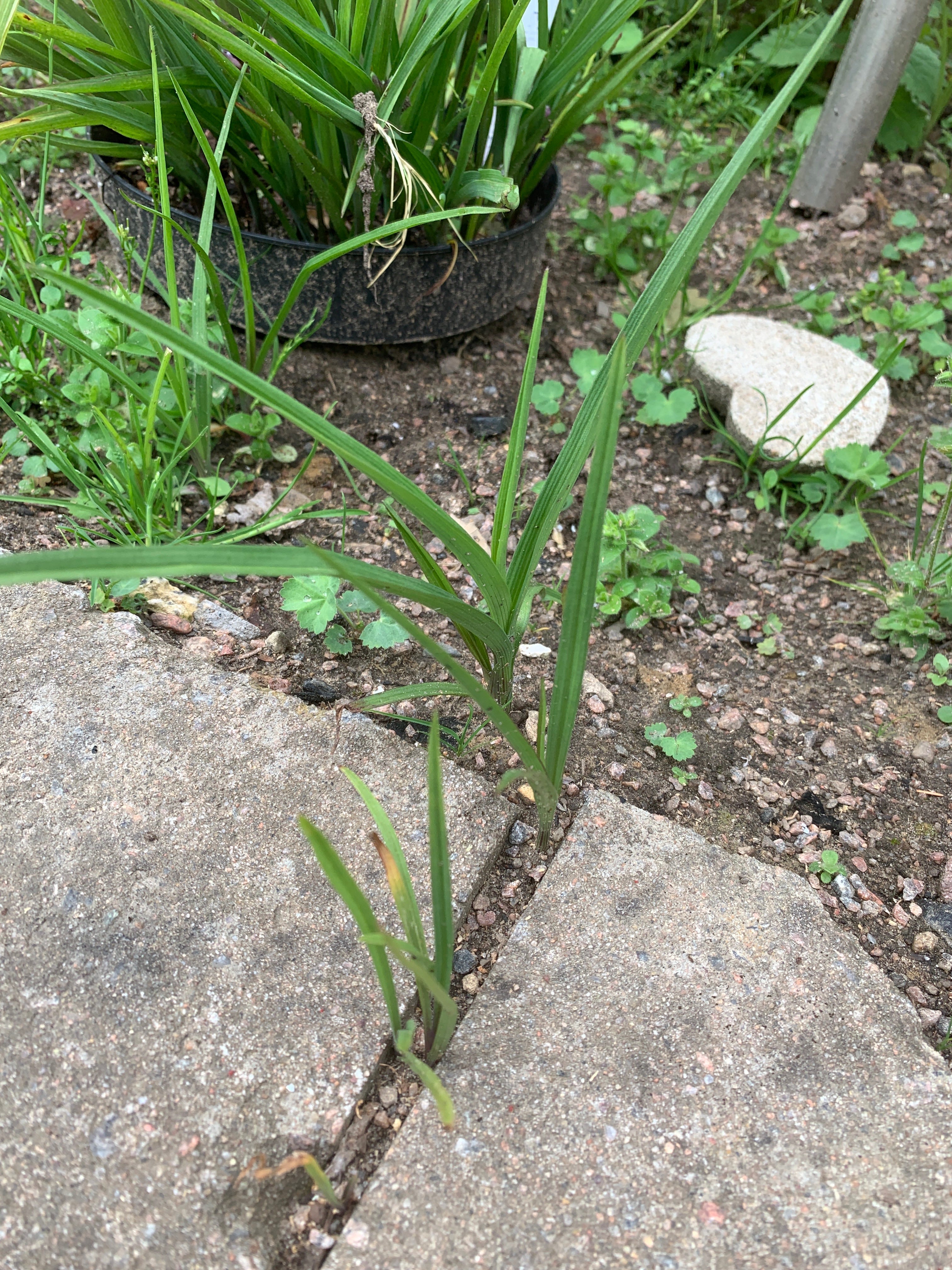
So I felt very relieved a few days ago when I started to see new shoots popping up from the soil. Most of the varieties seem to be coming back just fine, even the ones that had the least protection during the winter. It is always such a nice moment when the first new growth appears and you realise the plants made it through another season
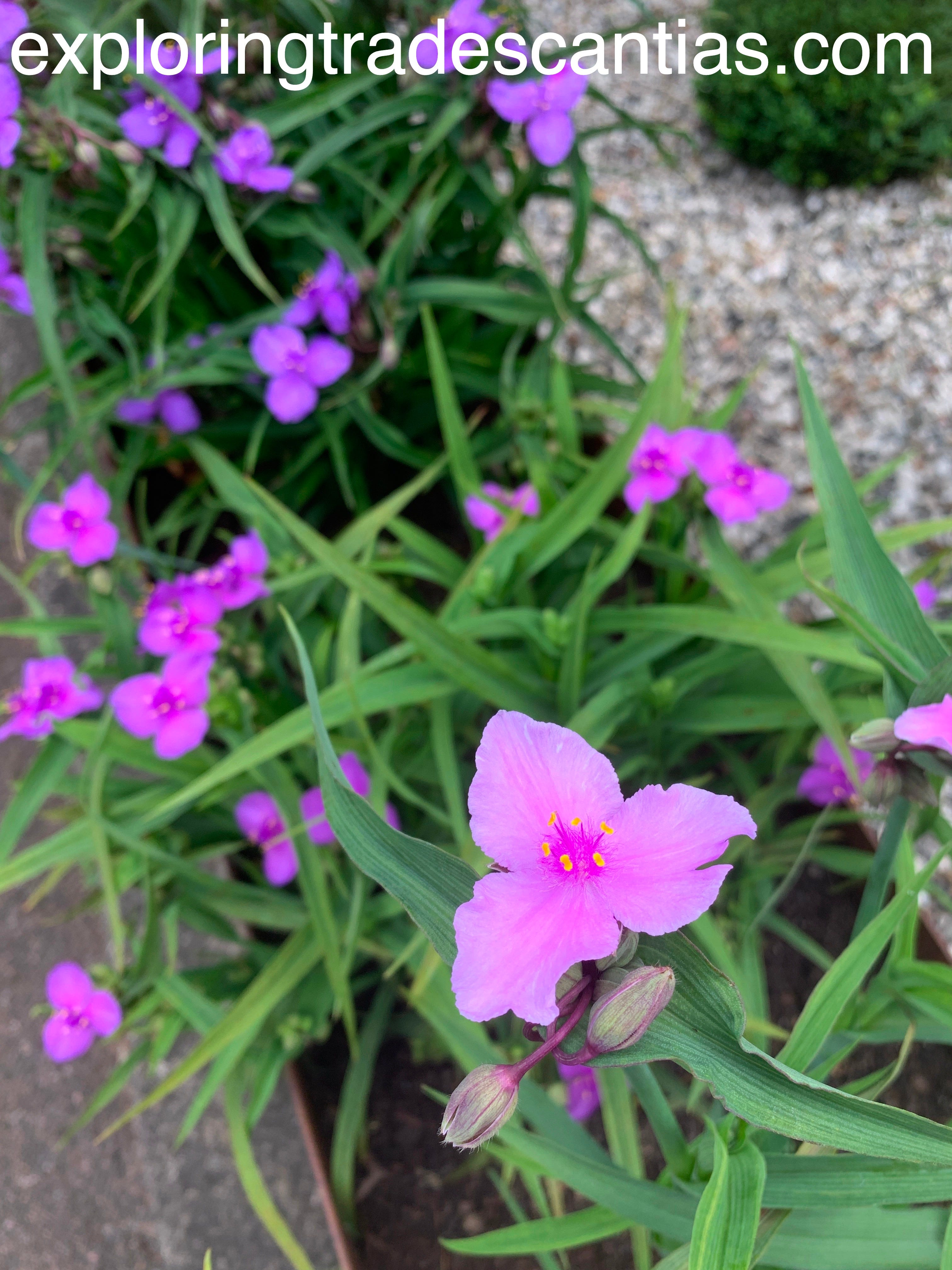
If you enjoy Tradescantias but live in a colder climate, Andersonianas are definitely worth trying. They bring colour to the garden all summer and come back again the next year.
Do you grow any hardy Tradescantias in your garden? I would love to hear about them.
.Until next time,
Katja


