

Summer is coming to an end, and while my Tradescantias have loved the long days and warm weather, it’s time to start thinking about winter. For many of us, this means moving plants back inside and adjusting how we care for them.
It can feel a little overwhelming to know exactly what to do, but don’t worry, I’ve put together my best tips to make the transition as smooth as possible. With a little preparation now, your Tradescantias will be ready to stay healthy through the colder months.
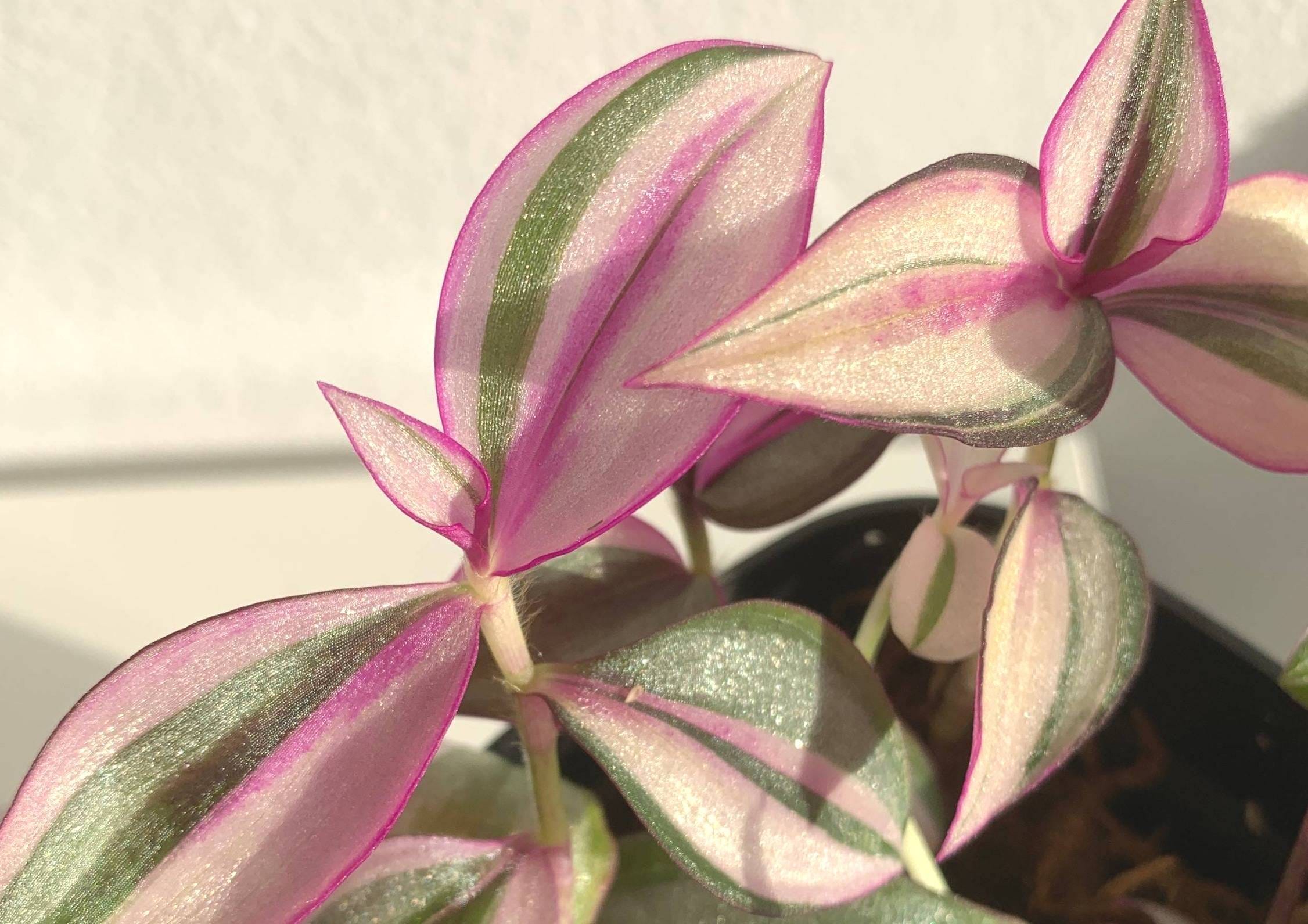
Tradescantia of the Week: Zebrina Quadricolor
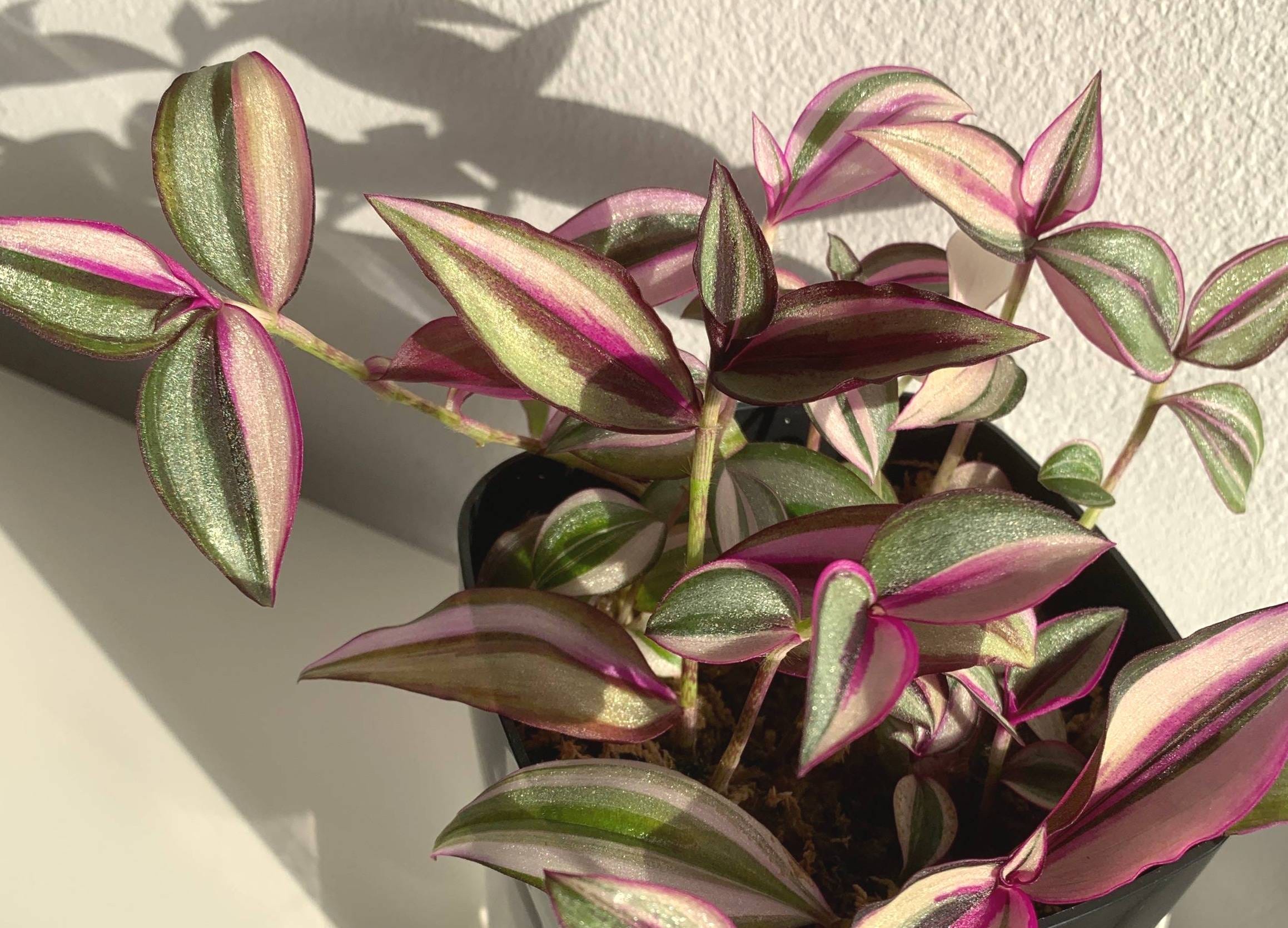
This beauty has gone by many names over the years, Multicolor, Zebrina Tricolor, even Multicolor Mme Lequesne. To make things even trickier, the cultivar Mundula Lisa is sometimes incorrectly called Quadricolor too. Quadricolor is believed to be a sport of an unknown Zebrina (most likely Superba) and was first documented back in 1879 in France.
It’s one of the four variegated Zebrinas, with broad silvery bands and pink variegation.
There are four known variegated cultivars in the Zebrina species, and at first glance they can be difficult to tell apart. The exception is Pink Paradise, with its striking magenta leaves. For the others, details in the silver stripes give the best clues. Quadricolor has the widest stripes, which cover about half of the leaf and appear solid. HappiLee has slightly narrower stripes with a zigzag pattern. And Discolor Multicolor has the thinnest stripes, with a broken look.
In my experience, Quadricolor is also a bit more demanding than many other Tradescantias. It reverts easily and requires close attention to maintain its colourful variegation. But when it looks good, it’s absolutely stunning.
Getting Tradescantias Ready for Winter
As the days get shorter and the temperatures drop, our Tradescantias need a little extra care. Here’s what to think about when bringing them inside and adjusting their care for the colder months.
Bringing Them Inside
The very first step in preparing your Tradescantias for winter is deciding which ones need to come back indoors. Most tropical varieties do just fine as long as temperatures stay above 10°C (50°F). Below that, they can survive for a while, but they’ll start to suffer, growth slows down drastically, and the plants may develop damage that takes time to recover from.
They cannot handle freezing temperatures. Some varieties might cope with a short dip below 0°C (32°F), but others, like Zebrinas, will not survive at all. If you want to keep your Tradescantias looking their best, I recommend moving them inside before night temperatures drop below 10°C.
The frost-hardy Andersonianas are a different story. They can take frost and often manage through the whole winter outdoors. Even so, extremely cold or prolonged freezing can cause damage, but usually they bounce back once spring arrives. By the time the warmer weather returns, they often send up fresh new growth from the ground.
Pests
Before you bring any plants inside, it’s important to give them a careful check for pests. Look closely at the undersides of the leaves and along the stems, since thrips, spider mites, and mealybugs love to hide there. If you spot anything suspicious, treat it right away, it’s much easier to handle pests before they spread indoors.
I like to quarantine any plants I’ve had outside, just to be safe. Even healthy-looking plants can carry hidden hitchhikers, and once they’re in your home it can be very difficult to get rid of them. A little extra time now can save a lot of frustration later.
Adjusting Care Indoors
Fall and winter can be a tricky time for Tradescantias. With shorter days, less light, and cooler indoor temperatures, growth slows down a lot and that means the way you care for them also needs to change.
Watering
In fall and winter, watering can feel unpredictable. Since growth slows and the air is cooler, your plants generally need less water. But at the same time, heating systems can dry out the air, which sometimes makes them dry out faster, especially if they’re sitting above a radiator. The best approach is to always check the soil before watering, instead of sticking to a schedule. And don’t worry too much about humidity, Tradescantias usually handle normal indoor air just fine.
Light
Light is often the biggest challenge during winter, and most problems I see with Tradescantias at this time of year can be traced back to not enough light. A weak plant is more sensitive to overwatering, pests, and disease. The best thing you can do is place them in your brightest window, and if that’s not enough, grow lights are a great option. Poor light also makes propagation harder, so unless you have grow lights to support them, I recommend holding off on trimming and propagating until spring.
Fertilizing
Because Tradescantias grow more slowly in winter, they don’t need much food. This is the time to pause fertilizing. Adding nutrients when the plant isn’t actively using them can build up in the soil and do more harm than good.
Pest monitoring
Weaker plants are easier targets for pests. Thrips and spider mites in particular can show up indoors during winter. Regularly check both sides of the leaves so you can catch problems early, before they spread.
Winter Storage
Last year I experimented with keeping some of my Tradescantias in the storage room over winter. I potted up a few cuttings and placed them near a window where it gets cold during winter but never freezing. I watered them once in October and then left them completely dry until spring.
By April, a few of them started to look dehydrated, so I gave them water again, and in May, when the risk of frost was finally over, I planted them back outside. Most of them survived the winter just fine. A few didn’t make it, but I believe that was because they hadn’t developed enough roots before the cold set in, since I had only just taken the cuttings in October.
This year, I’m starting a little earlier. I’m taking cuttings from my outdoor plants now, so they’ll have more time to grow stronger roots before winter arrives. My plan is the same: water them for the last time in late October, then let them rest all winter until spring brings them back to life.
Wrapping it Up
Winter doesn’t have to be a difficult season for Tradescantias. With a little planning, bringing them inside before the nights get too cold and adjusting your care to match the lower light, you can help your plants make it through the darker months.
By spring, they’ll be ready to grow back stronger and fuller than ever. Until then, think of winter as a time for both you and your Tradescantias to rest a little.
I hope these tips make you feel more confident about preparing your plants for the colder months.
Until next time, happy planting! 🌿
Katja


Disclaimer: These are affiliate links, which means I earn a small commission if you make a purchase using my codes, at no extra cost to you. Your support helps me keep sharing Tradescantia tips and content—thank you!
