

I have always had a soft spot for pink. Soft pastel pink, bright bubblegum pink, deep almost purple pink. When it comes to Tradescantias, there are so many pink ones to choose from. Everyone knows about the gorgeous Nanouk. It is probably the most well known pink Tradescantia and everyone’s favourite. But there are so many more to discover.
So today I am sharing seven pink Tradescantias that I truly love. Some have big leaves, some have smaller ones, and one does not even have the typical pink foliage but instead the prettiest pink flowers. All of them deserve a place in a pink plant lover’s collection.
1. Pink Furry
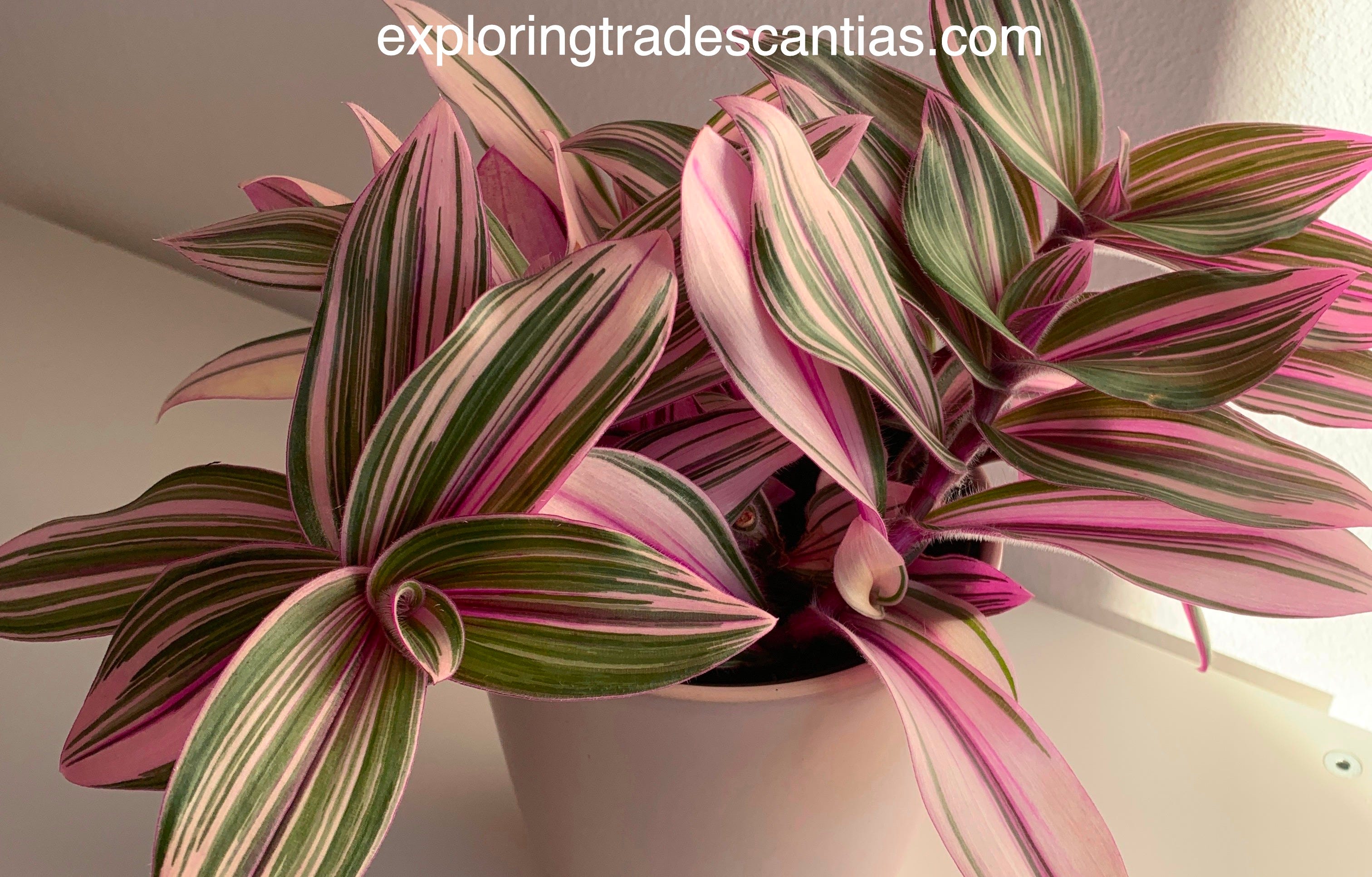
At first glance, Pink Furry looks a lot like Nanouk, but if you look closer, you will see the difference. One big difference is the soft, furry undersides of the leaves on Pink Furry. It also has a darker pink stripe running down the centre, which makes the colour stand out even more.
Pink Furry, just like Nanouk, belongs to the Cerinthoides group. They have larger, thicker leaves and sturdy stems that can store water quite well. Because of that, they can handle drying out better than many other Tradescantias. The stems grow upright at first, but once they get heavier, they naturally fall over and start trailing.
In lower light, the leaves can turn more pale and take on a soft pink, almost cream tone. Give it brighter light, and the pink becomes much deeper and more intense.
2. Fairy Wings
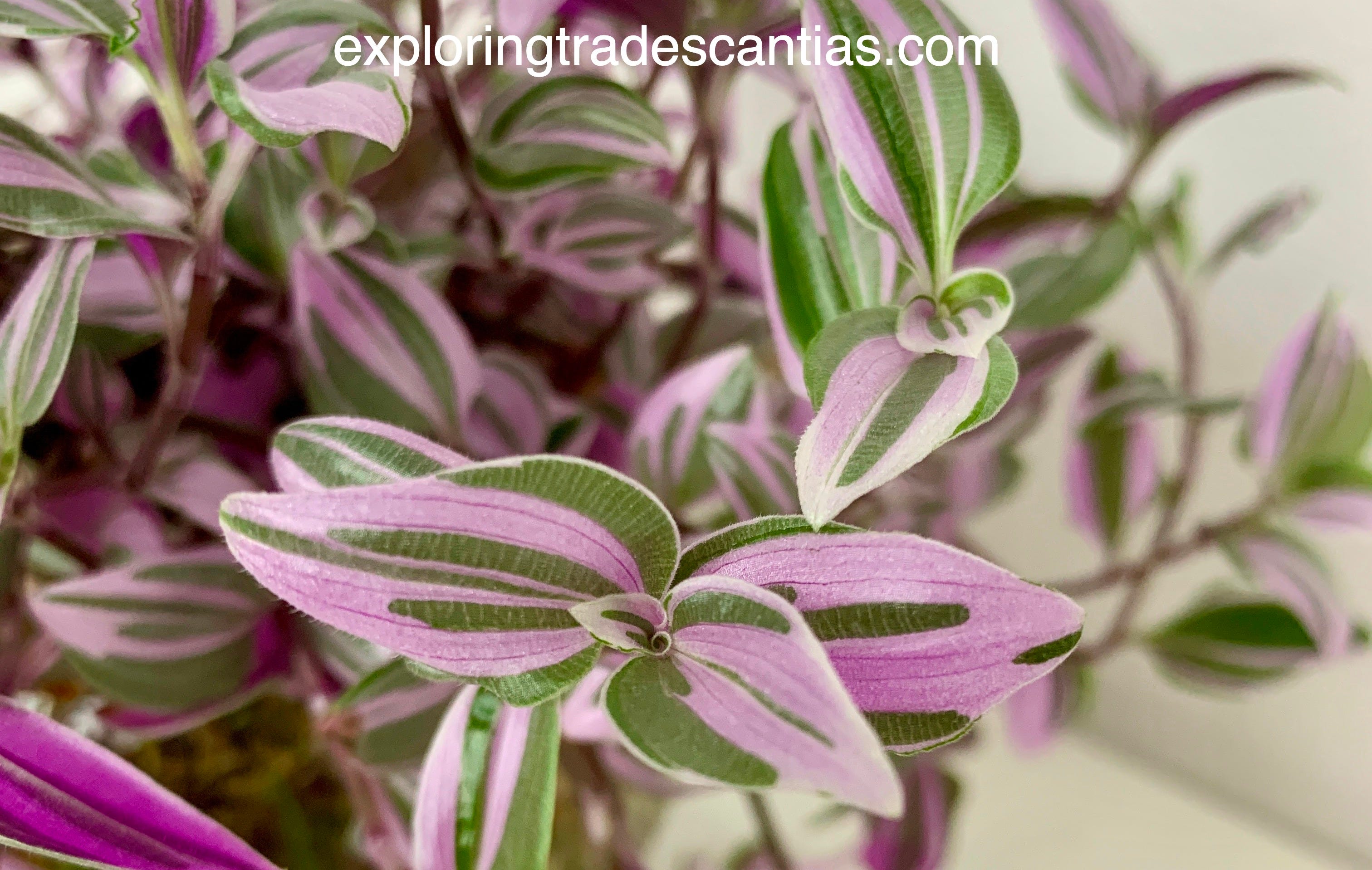
Fairy Wings is probably the smallest Tradescantias there is. It looks very similar to the more well known Lisa, also called Tricolor. But you can tell them apart by their variegation. Fairy Wings has what is called marginal variegation, while Lisa has sectoral variegation.
One big difference between these two types of variegation is stability. Plants with marginal variegation tend to revert much less often than those with sectoral variegation. That is one of the reasons I prefer Fairy Wings over Lisa.
The colour of the leaves is not a reliable way to tell them apart, since the colour can change a lot depending on light and growing conditions.
Fairy Wings belongs to the Mundula group. It is very similar to Fluminensis, but Mundulas have tiny hairs scattered across the leaves, while Fluminensis does not.
If you want to learn more about marginal and sectoral variegation, Tradescantia Hub has written a very good article explaining the differences. You can read it here.
3. HappiLee
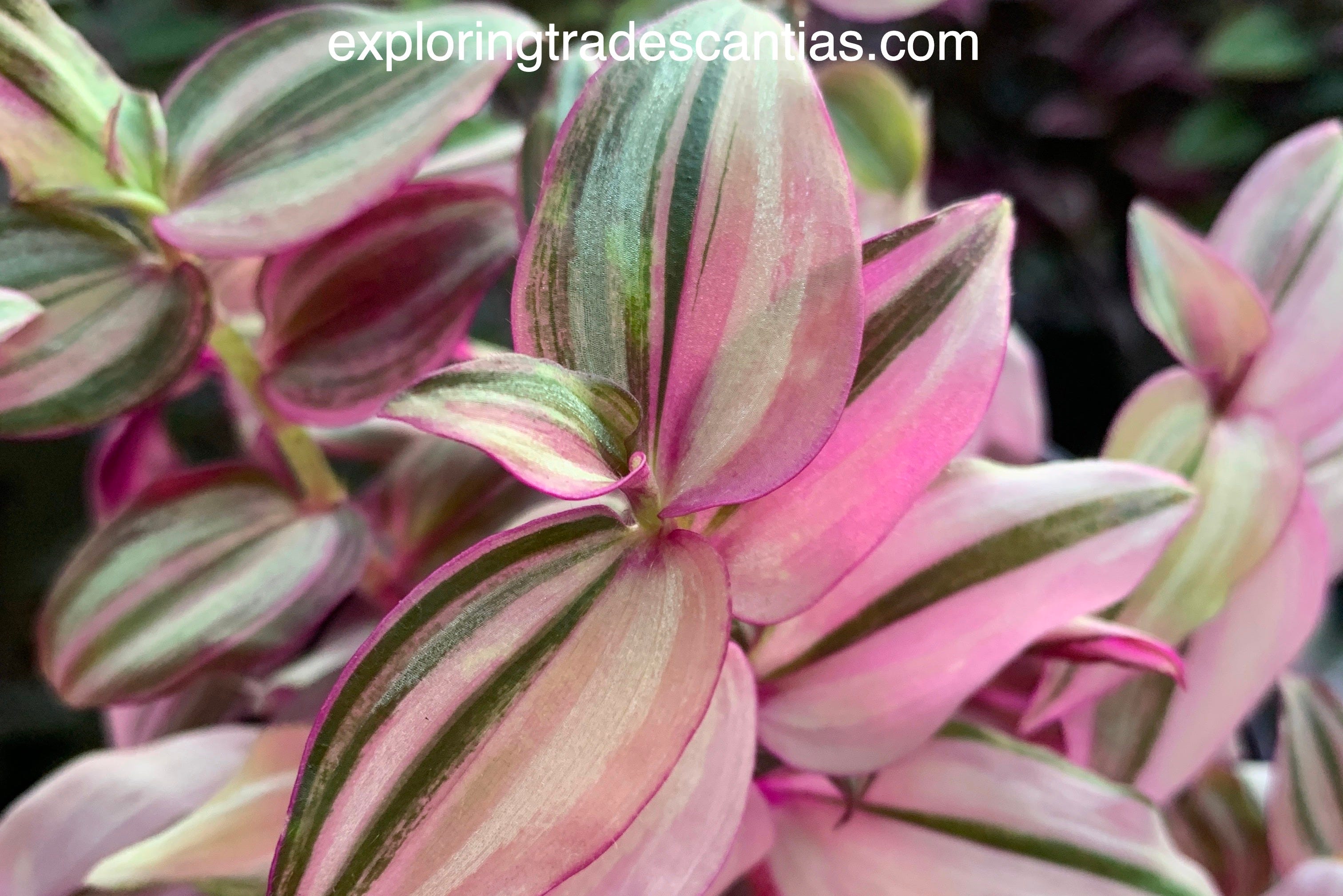
Next is the sibling to the popular Quadricolor. It is also often called DannyLee, which can be a little confusing, but they are the same plant. HappiLee is a sport from Tradescantia Zebrina Minima, and if it reverts, it will revert back to Minima.
It is one of the three variegated Zebrinas, together with Quadricolor and Multicolor Discolor. The main difference between these three is the silver striping. Quadricolor has the widest silver stripes. HappiLee has a slightly zigzag pattern in its stripes. Multicolor Discolor has thinner stripes with a more broken appearance.
HappiLee grows a bit more slowly than the other two and generally has thinner, weaker stems. But it keeps its variegation well and has such a lovely pink colour that makes it completely worth it.
4. Maiden’s Blush
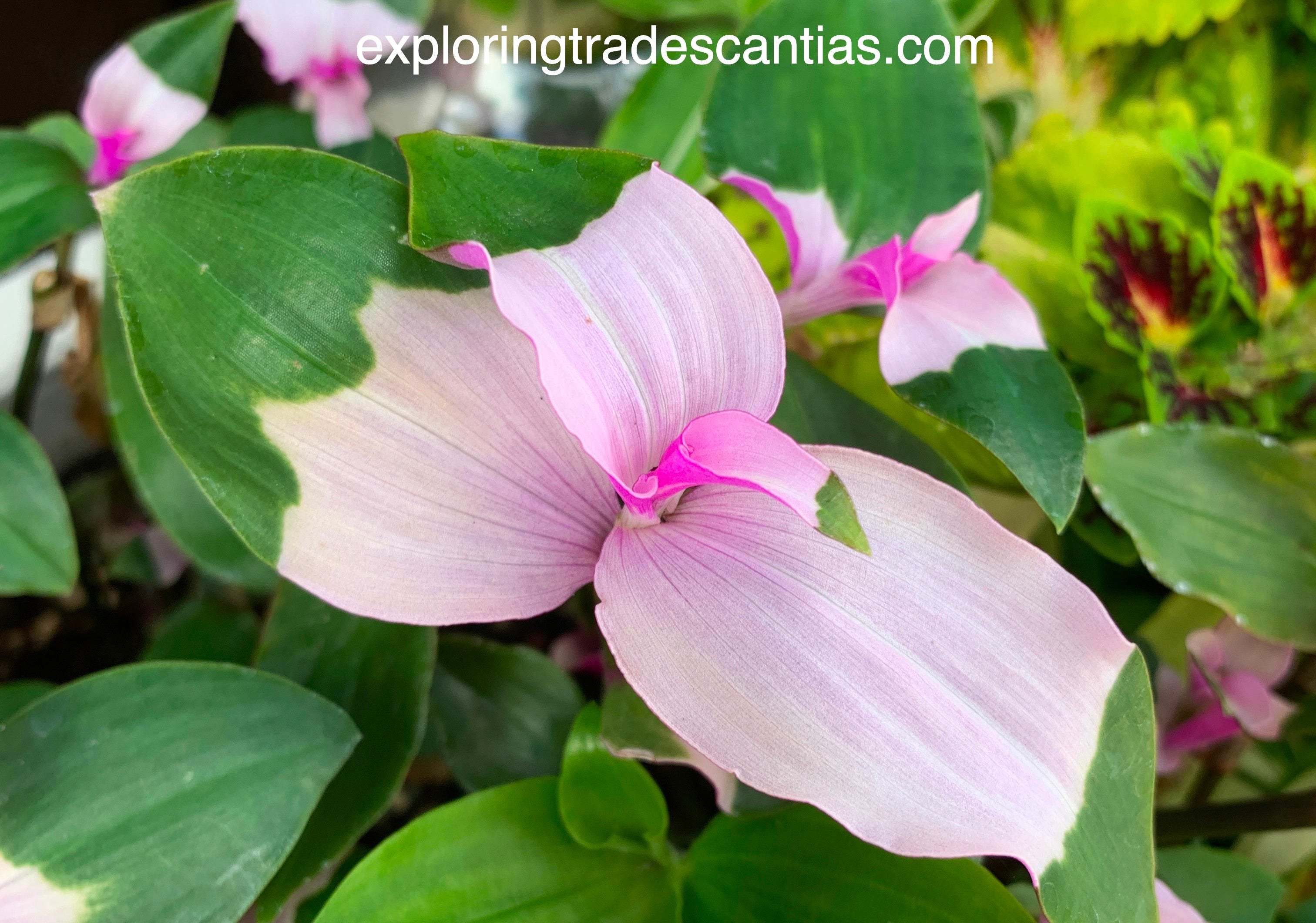
It is impossible to make a list of pink Tradescantias without Maiden’s Blush. It might just be one of the most interesting ones of all. What makes it so special is how it gets its pink colour. Most variegated plants change with light, but Maiden’s Blush reacts to cold or changes in temperature.
When the temperature shifts, the leaves start turning pink from the centre. If you struggle to get yours to blush, try placing it outdoors in summer. That always works with mine.
Many people confuse it with Blushing Bride, but they are not the same at all. Blushing Bride belongs to the Andersoniana group. It is a frost hardy Tradescantia with long, grasslike leaves. So if your plant has short, thicker leaves and turns pink, the correct name is Maiden’s Blush.
5. Pink Stripe
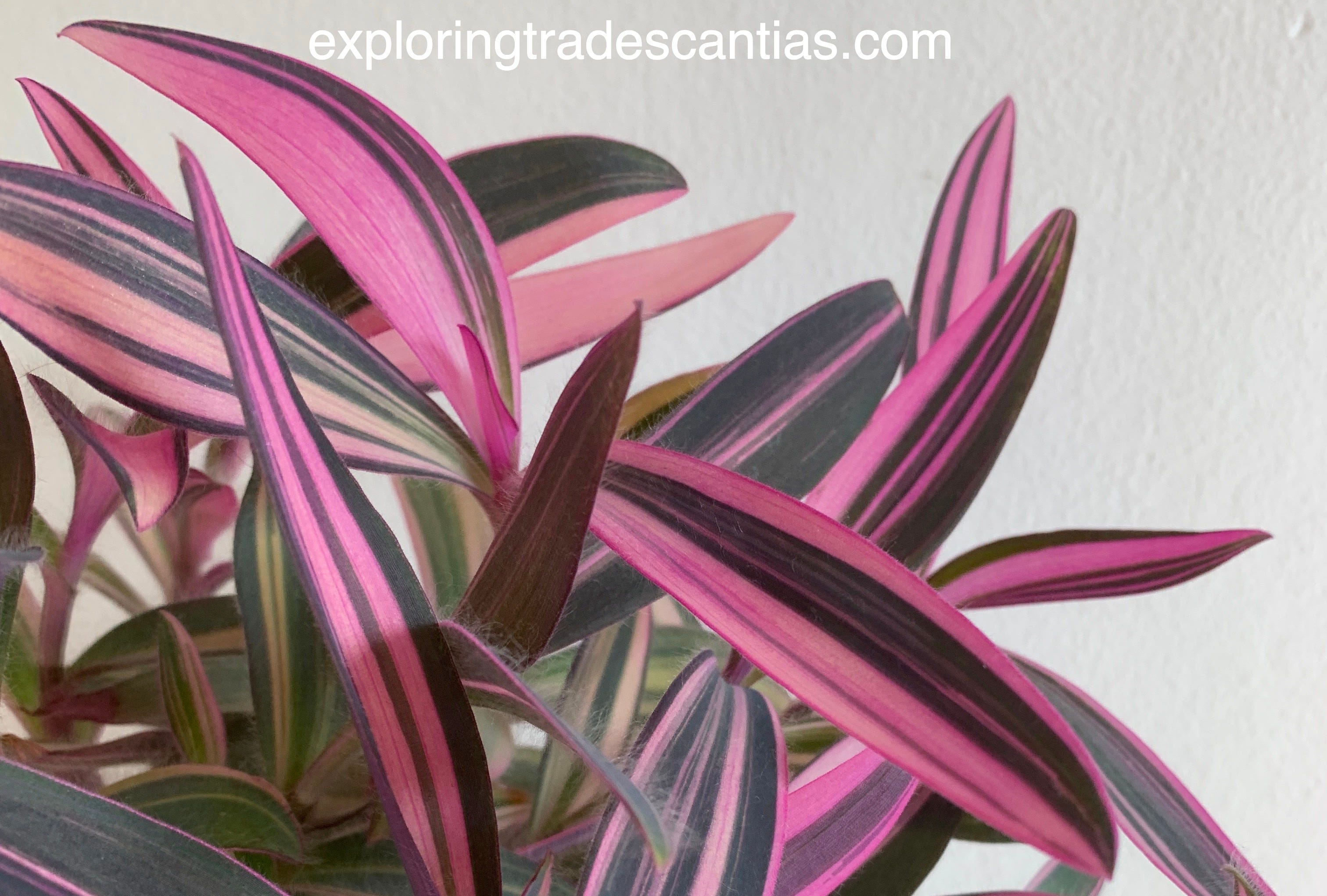
Pink Stripe is the variegated version of Purpurea. Since Purpurea is often called Purple Heart, Pink Stripe is also known as variegated Purple Heart. It has deep purple leaves with bright pink stripes.
It can revert quite easily, so you need to keep an eye on it and trim away any fully purple stems.
Pink Stripe belongs to the Pallida group, which is known for thick stems and fleshy leaves. They are very drought tolerant and you will often see them growing outdoors in full sun in warmer climates.
6. Unicorn
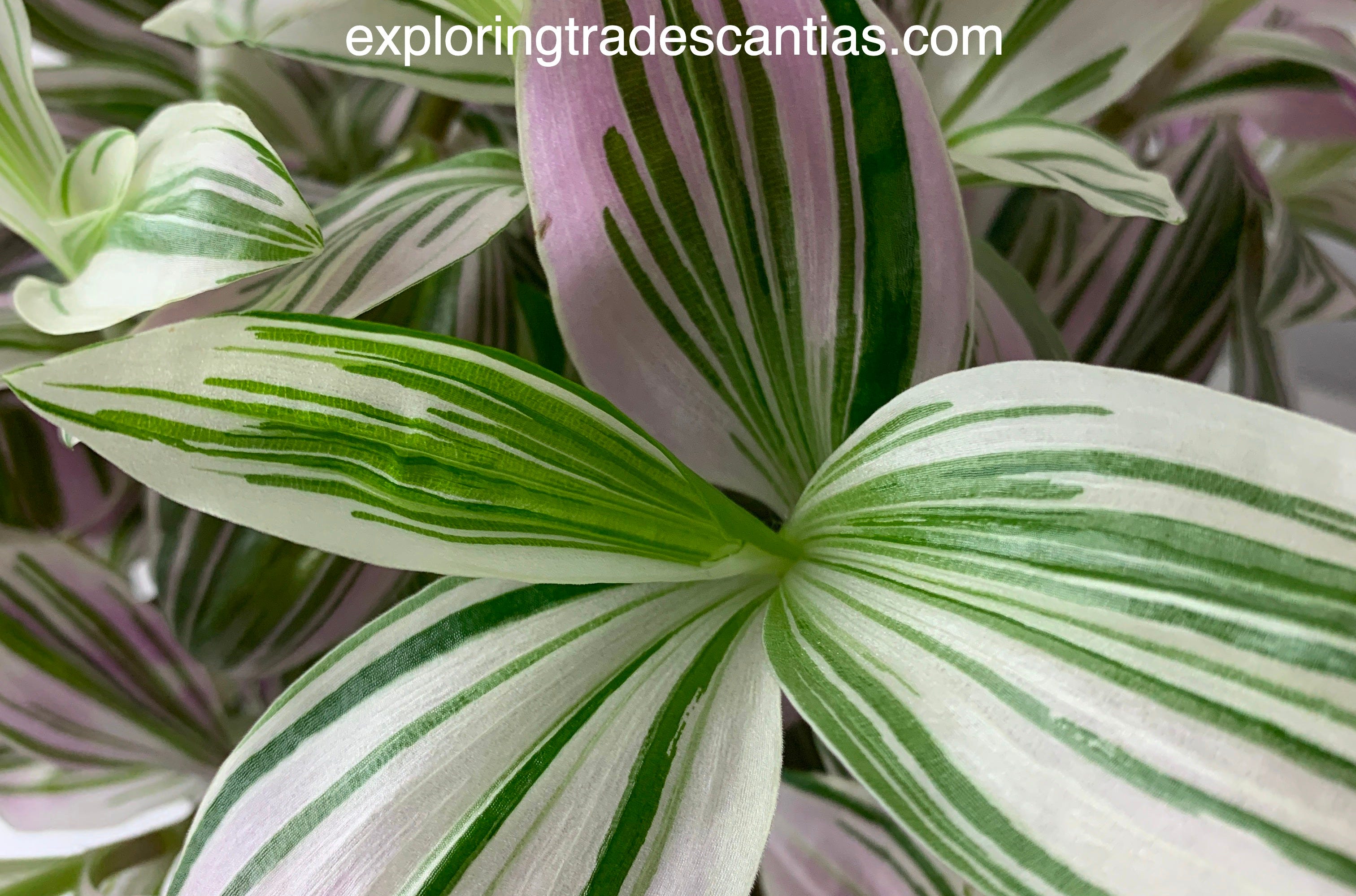
There are a few pink varieties in what’s called the Continental Group, but out of all of them, Unicorn is probably my favourite. It has a soft peachy pink colour that feels a little different from the brighter pink types.
Like many plants in the Continental Group, it has a compact growth habit and branches out a lot. It stays quite full without much effort. What makes it extra special, apart from the colour, is that some leaves occasionally develop an extra yellow stripe. Andersoniana
7. Andersoniana
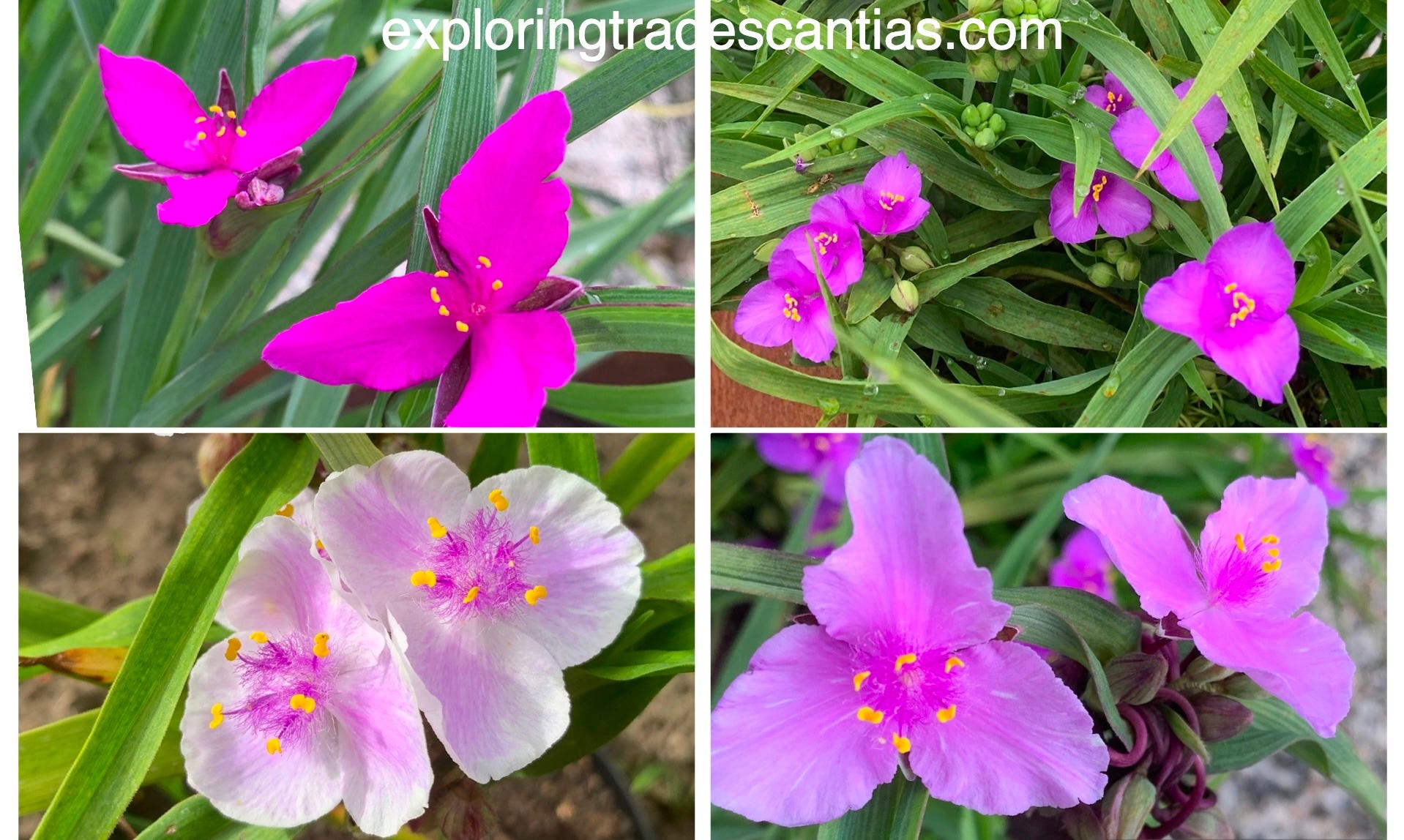
The last one on this list is not just one variety. And unlike the others, it is not known for pink foliage. Instead, some Andersonianas have the prettiest pink flowers.
You may have come across the name Tradescantia Andersoniana before. These are not the typical tropical Tradescantias that we grow indoors for their colourful leaves. Andersonianas are grown mainly for their flowers and for being able to handle cold weather.
Instead of thick, colourful leaves, they have long, grass like foliage. The flowers still have three petals and, just like the tropical ones, each flower only lasts a day. They originate from North America but have become very popular in Europe as well.
Once they start flowering, they keep going all summer, then die back to the roots in winter and return again in spring.
It really is hard to choose just one favourite. Pink can look so different depending on the variety, the light, and even the season. That is part of what makes collecting them so fun.
If you are thinking about adding more pink to your home, you really cannot go wrong with any of these. Which one is your favourite? And which one did I miss on this list? I would love to know your thoughts.
Until next time!
Katja

Disclaimer: These are affiliate links, which means I earn a small commission if you make a purchase using my code, at no extra cost to you. Your support helps me keep sharing Tradescantia tips and content—thank you!

